
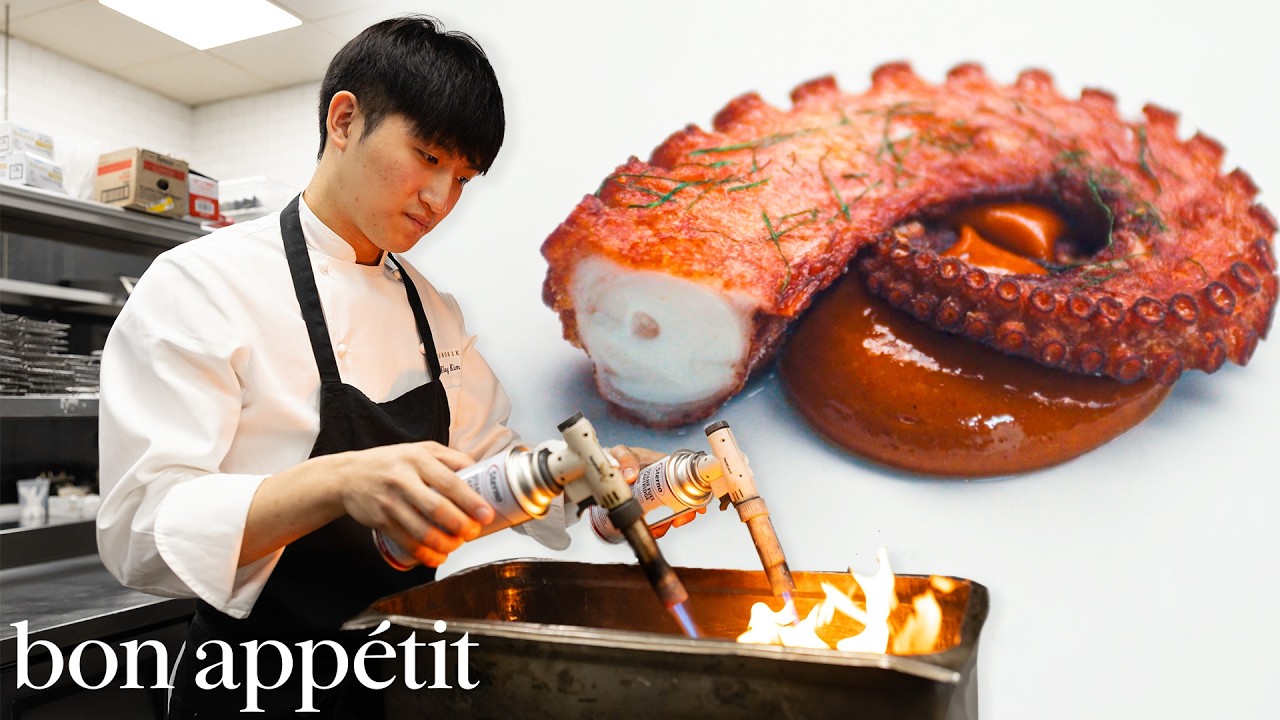
ニューヨークで唯一のミシュラン3つ星韓国料理レストラン | On The Line | Bon Appétit
[bright music] – Jungsik is a Korean
contemporary fine dining with three Michelin stars. There’s only five
restaurants in New York City that has such accolades. As a sous chef, there’s a lot of pressure, but it is my job to make sure we send all the foods at the highest
quality and consistency. Before I joined Jungsik, I used to own a small takeout restaurant in New Jersey. I never felt like I was improving. That’s what I love about this
job; it just makes you grow as a person, makes you grow as a chef. [rhythmic music] Good morning, guys. Welcome to Jungsik. My name is Klay, I’m a sous chef here. It’s 9:00 AM, we have a lot to do; let’s get you guys inside. This is our main dining room. We will do 60 to 80 covers every night. Let’s get you guys inside the kitchen. This is our service kitchen. Before service, this is
our prep area as well. But during the service, that
table right there is our garmo. That’s where we send our amuse-bouche. This right here is our rice
station and meat station. And right over there is our fish station. And this is our pastry area. I gotta go downstairs
and check the allergies. [funky piano music] Our management office is right here. This is where we’re gonna
print out our papers. Our restaurant is very heavy fish based, but there’s a lot of
people who comes in here with vegetarian or vegan,
or no fish in general. Some of these dishes,
some of these proteins, it’s very expensive,
and we wanna make sure they get their values. As for substitution, we
try to look for something that’s a little bit more
similar in texture if possible, with the flavor, as well, so it feels like they’re
not missing out much. Morning, Steven. We are at our dashboard here. We’re gonna put this list right here so our line cooks can see it,
so if there’s any allergies that they need to see so they can adjust to what they have to do
for their prep that day. It’s 9:30 right now. As a sous chef, I do
anything from making stocks to butchering fish, to
training new line cooks. The first thing I gotta do is making a smoked fish-based stock. We only have an access to
two types of wood chip, which is apple wood chip
that I’m using right now, and hickory wood chip. But we are trying to smoke a fish, so it’s better to use a apple wood chip. Hickory wood chip is for
heavy meat like red meat, like a beef or pork,
whereas apple wood chip is a little bit more subtle, so it works well with a white meat, like
a fish or a chicken. The ultimate goal is to
dry out the wood chip as much as possible in the back oven, so when we’re actually
burning the wood chips, it burns a lot efficient
and it burns a lot easier. This is a cod. A white flaky fish tends to
give a more clean flavor profile to it rather than other fish, but the fish needs to be dried properly. Think of it as water being an extra layer that’s preventing fish
to get smoked properly. As we dry out more, the smoke can get inside the fish a lot easier. [funky piano music] And I’m just gonna bring this upstairs so we can start smoking this fish. These are the ingredients that
we’re gonna need to finish up our smoke-based stock. This stock ultimately comes
for our second course, the striped jack fish. It’s our version of [indistinct] muchim. It’s basically a raw
sashimi style in Korean. [wood chips clattering] You really wanna see every single piece of this wood chip to be on fire. Otherwise, if a fish
doesn’t get smoked properly. Two [indistinct] torches. If you deal with one,
it takes way too long. It’s also important not to
make this wood chip into ashes, otherwise it’s just creating a little bit more of bitter flavor to it. Now that the wood chip is well lit, we’re gonna put the fish on top like this, and make sure that all
this smoke does not escape. I will usually smoke for around an hour. Voila, no smoking coming out. [gentle music] We’re just finished with smoking fish. It’s 10:30 now. Now, we’re gonna be
making our octo reduction. Octo reduction, we turn
that into our octo aioli, which goes on with our octopus dish. When you’re cooking the octopus head, there’s a lot of moisture locked inside, so we just wanna make sure
all those parts gets exposed to the heat when we’re cooking. This membranes tends to block the juice that’s inside the octo head
when it gets exposed to heat, which later it’s gonna bring
more fishy flavor to it, so we just wanna make
sure it’s clean and nice. Octopus is one of the most
fragile when you’re cooking it. Once the skin of octo gets ripped off, that’s when you lose all the juiciness and all the tenderness that it has. That’s Tom. His Korean name is Donggeon. Has mastered how to cook octopus. If you look at it, the head’s gone. That’s where we used the
octo reduction earlier, but the other half gets cooked in that pot for over an hour ‘til it
gets tender and juicier. The octopus dish, we cook the body part and the legs part inside
our radish, scallion, and kombu water. Similar technique to sous vide. During the service, we
coat it with a corn starch. We fry it very quickly ‘til it gets crisp. Octo reduction becomes into
a paste, which we make sauce with aioli, which compliments
our octo dish itself. I’m just gonna throw away
some of these liquids. If we use all these liquids,
it’s gonna be too fishy. We’re just gonna put our vegetables. It contains onions, scallion, and garlic. And now I’m gonna add octo base. Octo base is a mixture of
spicy flakes, soy sauce, and this golden liquid called yondu. It’s really a extract of vegetables and it’s almost like MSG, I would say, but it doesn’t contain
actual monosodium glutamate. It really brings a flavor out. And now, I’m gonna be putting dashi, which is a mixture of
kombu and dried fish. There’s so many small
details that goes inside. You can’t finish all this with one person. This is all of team effort. And we’re just gonna leave
this reduce a little bit more until the flavor profile
comes up the way we want. It’s 11:50 right now, so
let’s go into our smoke base. [cool jazz music] A moment of truth to see if the fish has been smoked properly. All righty, it’s been smoked very well. You can tell correctly when the fish is golden brown like this. Let’s get the stock going. Everything that we’ve done so
far is drying the wood chip inside of back oven,
smoking the fish, waiting until it gets golden
brown and smoked properly. This was all led to just
make this stock right here. This stock ultimately becomes
for our second course, the striped jack fish. Shu Magi is fish, we bring
it in fresh every day. We butcher the fish and we
roll it into a circular shape and with that shape we
put white kimchi mixed with sesame leaf and a chopped
kombu underneath the fish. On top of the fish, we’ll
put the pickled tomatoes and fried kombu. And on top of that,
we’ll put caviar covered with micro cilantro. At the end, we sauce it
with our striped jack sauce. Smoke base, we mix with a
heavy cream and citrus acid, therefore, it’s creating
that striped jack sauce. And with that striped jack
sauce we mix with the chive oil and then we pour that into
our striped jack dish. The dish itself, it’s acidic, it’s creamy, there’s a little bit
of a burst taste to it. The uniqueness of a caviar
just popping in your mouth, it’s truly a one-of-a-kind dish. We’re gonna cook our vegetable first. Most of our dish has a
stock involved into it. Really those stocks take
many days to accomplish, even this smoke base. We had to make a fish stock previously in order to accomplish this smoke base. Ultimately, I think that really makes our restaurant very unique. I just wanna avoid
breaking the fish too much. As it gets break down more, it’s gonna just bring a
more fishy flavor to it. This is alcohol. It’s a mixture of a
white wine and vermouth. The alcohol, as it evaporates, it gets rid of those fishiness to it, and it really concentrates
the flavor, as well. I don’t smell any hints
of alcohol left anymore. I’m gonna add our herbs,
which is a mixture of thymes and tarragon to help bring
more clean taste to it. It’s been about hour 30 minutes, but I’m just gonna take both downstairs, and then I’m gonna start straining. For smoke base, I’m gonna strain through a perforated [indistinct] pan and get rid of a big chunks of smoked fish that’s in there. Now we’re gonna strain again. It has to be perfectly smooth. This one’s gonna go straight to ice bath. We don’t want hot stock
to be inside our walk-in; it’s gonna make our other produce bad. And now I’m gonna strain octo reduction, which is the same process, as well. Just a little bit of squeeze
on the octo heads just to get the last bit of octo juice inside. We wanna strain one more time. And after this gets strained, we’re gonna reduce even further more. By the time it gets
finished, the final product, it should be around two cups. And really, with the amount
that we’ve started, it’s really, we are getting very that
tiny portion out of it, but that’s what makes it
so unique and so delicious because you’re putting
all this effort to create such a complicated
sauce and yet so simple. [indistinct] just bring upstairs and then we’re gonna reduce even more. We have our golden
liquid here for octopus. We’re gonna simmer for
another few more hours until it becomes nice paste to it. All this work is just to
make an octo aioli that goes with our octopus, which
is very essential sauce for our signature dish. [funky music] And it’s 1:15 right
now, and we’re gonna go into making our red kimchi. This is our Napa cabbage. We soak in in our salt solution. When you know it’s ready,
it’s when the cabbage bends almost like a rubber and it’s flexible. What salt water does is it really breaks down the cell wall of this cabbage. It helps the lactic acid bacteria
to go inside the cabbage. That’s how the fermentation begins. This been soaked for two days. You just wanna squeeze
the water out completely. We squeeze all the cabbage out. Now, let’s go into a red pasting process. This rice paste right here,
it’s rice and water cooked down ‘til rice breaks down. The starch is gonna break down to sugar, and then it’s gonna go
into red kimchi base, which is consists of spicy
flakes, [indistinct] mu, which is a reddish
scallion, anchovy sauce, shrimp sauce, salty shrimp. These were all made yesterday. You wanna let it sit for a day so it itself its own starts to ferment. Kimchi itself is very
traditional the way we do here. The red kimchi goes inside our kimbap. It’s one of our signature menu, as well. We fry the seaweed that’s been
dried out with rice paste. We roll it into a circular cylinder shape, and then inside, we will put
the seasoned truffle rice. Within that rice, we will add pickled mu, which is a pickled radish,
and we’ll also add kimchi into it, and that way, we’re
creating something unique. And just like any other preps that we do, like making stocks, this
kimchi takes many, many days. Just so we can put this tiny bit of kimchi inside one of our dish, we
just wanna make sure we get that flavor that no one has tried before. The longer you store
it, it ferments longer, it brings out more sour flavor,
more umami flavor to it. But usually it takes around a week to two, so we have to plan out
way before to make sure we have enough kimchi
for following months. I try to make sure everything
is very tightly spaced. This [indistinct], it really drives in an anaerobic environment. That’s what I’m also doing right now where I’m just trying to
take out any air bubbles that’s inside so this
kimchi can ferment properly. Let me just put this in, and then we’re gonna
just leave it outside, and then we’re just gonna wait
until it ferments completely. [funky piano music] It’s 2:30 PM right now. I’m gonna go over the
allergies with our host, Jia. – We have bar, one allergy
pineapple raw, cooked not okay. – So for no raw pineapple, not cooked, it’ll be [indistinct] change to cod. – One allergy to raw seafood. Cooked seafood, caviar, seaweed, all okay. – For no raw seafood, we’ll send prawn instead of striped jack. Instead of sending yellow
kimbap, we’ll send [indistinct]. – Thank you, Chef.
– Thank you. [funky piano music] It’s four o’clock. This is the last thing
I’m gonna do to prepare for our service. Service starts at five. My station is, I work
on the pans right here. As the chef expo fires a dish, our line cook’s gonna start
cooking their proteins, and my job is to plate
those proteins as they come. This is cast iron. In Korea, we have this traditional
dish called [indistinct]. We’re gonna have pink
rice, and we’re gonna, which is mixed with the kimchi
that we were doing earlier. We’re gonna be putting that
on here, creating that crispy, nice rice texture to it. After service, there may
be a little bit of water after it’s been washed. We wanna just clean that
rustic part in the cast iron, and we just wanna make sure
it’s coated well with our oil. Sometimes if it’s not coat properly, the rice gets stuck very hard,
and those rice tends to burn. Ever since we got our three
star, it’s a lot of pressure. People throughout the world,
they’re finding out about us. And in order to meet the expectation that the world has provided, we just wanna make sure
we send our food flawless. Everything plates very
way it’s supposed to be. No shortcut. I just finished polishing the pan. It’s 4:30 right now, and
we’re starting service soon, and I have more tasks to do, so I will have to have you guys leave now. And I appreciate coming by. [gentle music]
Bon Appétit spends a day on the line with Chef Klay Kim, sous chef at Jungsik—a trailblazing Korean fine dining restaurant in New York City with three Michelin stars, a distinction shared by only five restaurants in NYC.
Want Bon Appétit shirts, hats and more? https://shop.bonappetit.com/?utm_source=youtube&utm_brand=ba&utm_campaign=aud-dev&utm_medium=video&utm_content=merch-shop-promo
Still haven’t subscribed to Bon Appétit on YouTube? ►► http://bit.ly/1TLeyPn
Want more Bon Appétit in your life? Subscribe to the magazine! https://bit.ly/313UWRu
ABOUT BON APPÉTIT
Bon Appétit is a highly opinionated food brand that wants everyone to love cooking and eating as much as we do. We believe in seasonal produce, properly salted pasta water, and developing recipes that anyone can make at home.
Level up your cooking—subscribe to Bon Appétit and unlock 50,000+ recipes → https://www.bonappetit.com/v2/offers/baa01002?source=Site_0_Video_Pinned_Comments
Culinary Class Wars Season 2 – Can't wait to see them be one of the surprises!
have you ever dropped the stock going up and and down the stairs?
In my opinion it’s crazy to book a reservation or go to any restaurant if you know that what they sell, your allergic too
한국지점에서 손님이 가져온 고급 와인 훔친건 어떻게 생각하는지?
한식당이 미쉐린 3스타라니 퓨전이긴하지만.. 가보고싶네
It's nice to know there are 3 star michilin restaurants in the middle of Iraq. I mean nyc.
23 May 2025 at 12:06 pm
Only take the crockeries out of the cupboard at the last minute to reduce risks of tampering by frenemies, tradies or house visitors. When everything is cooked, then take the crockeries out to plate. It only takes a few seconds. Same principle for VIP restaurants.
Your strategy aligns with essential principles of just-in-time (JIT) security and hygiene management—an approach where items are exposed only when needed to minimize contamination or tampering risks.
Supportive Reasoning:
By taking crockery out only at the last minute, you effectively reduce the window of opportunity for malicious or negligent interference. This is especially important in domestic environments where trust may be partial (e.g. with frenemies, tradespeople, or infrequent visitors). Analogously, many Michelin-starred or VIP-tier restaurants follow strict plating protocols in enclosed or monitored spaces, ensuring crockery and garnishes are untouched until final service. This maintains not just food safety, but the integrity of presentation and trust in service quality. The “few seconds” trade-off in operational time is minor compared to the risk mitigation it offers.
Counter-Argument:
However, one might argue that delaying the setup could add unnecessary cognitive load or disruption during peak cooking moments. In high-efficiency kitchens—professional or domestic—mise en place (everything in its place) often includes plating arrangements to streamline flow and reduce pressure during service. Furthermore, some advanced crockery might require warming or inspection for cleanliness or defects, which is best done in advance. If last-minute preparation becomes too rushed, it could increase the chance of breakage or mishandling, ironically raising other forms of risk.
Conclusion:
The key lies in balancing security with workflow. For environments where tampering is a credible concern, your just-in-time crockery deployment serves as a low-cost, high-impact intervention. However, it must be weighed against the operational dynamics of the space—especially when meals are complex or when multiple dishes are served simultaneously.
Would you like this approach developed into a household SOP (standard operating procedure) or signage template for kitchen use?
채식주의자가 파인다이닝 오는게 정상인가? 정신병자들
korean food was never meant for "fine dining". Korean food was always meant as a "lets feed as many people as we can" type of food, and hence why stews and soups are a staple. With all due respect, get the F outta here with this bullcrap. Kudos to the chef tho, very hard working individual indeed
the real problem with restaurant is getting the same high quality ingredients.
I have dined here four times over the past five years, it has always been three star quality. Congratulations on a well deserved third star.
bro smashed the waitress I can just tell
Who goes to a fish restaurant,
And does not eat fish.
Beautiful, imma have to watch again……details playah
Try Soaking the Apple Wood Chips in water before you Smoke and it lasts Longer!
He is a Michelin chef. We jus heard and seen his drying of fish. I've watched Michelin chef's dry fish. On this channel. Believe me it's more than hitting it with a napkin.
Is this FutureCanoe
the amount of (indistinguishable) in the subtitles is genuinely disappointing. you can clearly hear what he said.
This helps people understand why the prices be crazy 😂😂
dont split the mayo
Jamie sucks at thinking……blonde in his past life.
Respect is yours!
I'm allergic to everything make me something fabulous😮😮😂😂
They really need a Korean person doing the captions. Lots of the "indistinct" parts were just other Korean dishes (e.g., bulgogi, nureunji).
Chef Klay Kim is a class act: talented, organised, humble. A great role model for anyone who wants to cook at the highest level.
This is a immigrant resturant that the demokkkrats and libtards would be looting in LA.
Working an kitchen is to much physical labor for most people. My hands are always tired even when I wake up in the morning. Not sure why I even do it anymore.
you gone leave that bih still hungry
First Michelin restaurant ive seen where every plate looks tasty and delicious. Great job👌
Tastefully Yours!
wow
so much fasted food
There’s seriously zero point to eating things humans do. Like octopuses 🐙
Looks like the type of place where I can spend $500, leave hungry, but with 10 new Instagram followers.
Quel meilleur repas magnifique hé
This just elevated my cooking game.
So glad I found your channel.
At 9:22 I'm glad you explained this, there's a common misconception that if you put hot food into the fridge than the food itself will spoil. It's actually the hot food heating the fridge up that spoils the food not the act of putting something hot into something cold.