
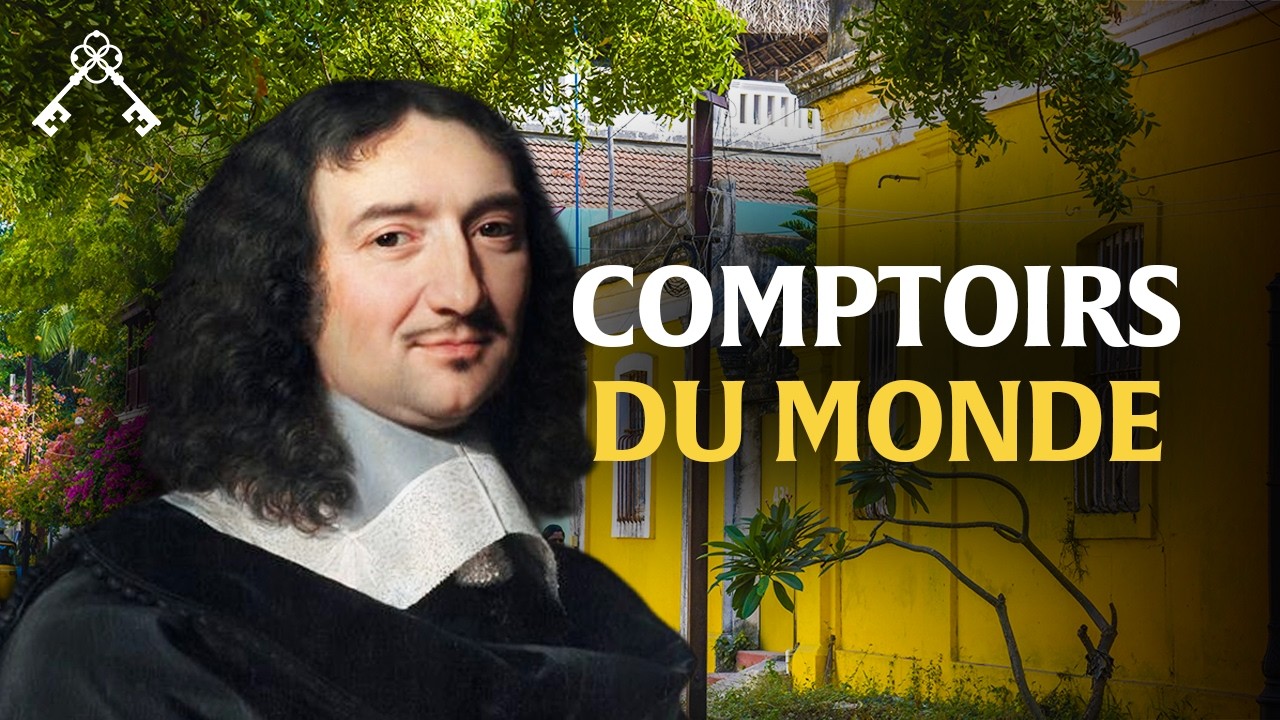
Entre Afrique et Asie : un Grand Tour aux mille cultures | Trésors du Patrimoine
Come on, folks. Right? Oh, yeah. Pack your things, baby. Now, I’ll put on your shoes. Let’s take a break. I’ll turn it loose. Come for a ride. I want to take you out.
Yeah. Come for a ride. I want to take you out. When the French landed on this island, they named it Saint-Louis in honor of Louis IX and Louis XIV. When you scratch a Saint-Louisian, don’t
look far, you’ll find a Frenchman. Gum arabic was the wealth
of these regions at the time. That’s the cell for the recalcitrants. This is where
those who resisted were imprisoned. Ousmane, wrestling
is the popular sport here. Yes, pretty much like football. Here in Canton, the French come to
buy silk, tea and porcelain. Europeans were unable to achieve
the finesse and delicacy that was discovered with Chinese porcelain. There are
many soldiers who returned after 15 years of service and it was they who
introduced the game of pétanque to Pondicherry. It is a rather exceptional piece of work
that few workshops in the world and few craftsmen could
still do today. Good evening everyone and thank you for joining us for this new stage of the Grand Tour. We are in the citadel
of Port-Louis, at the entrance to the harbor of Orient, on the south coast of Brittany. And if I chose this citadel
to begin this new stage of the Grand Tour, it is because it
reminds us of the fabulous history of the French East India Company,
a company created in the 17th century by the will of two men,
Louis XIV and Jean-Baptiste Colbert, who had the ambition to revive
French trade at that time and to compete with the Dutch
and the English in this sector. So, to revive maritime trade,
port facilities are needed. And in 1666, the two men
chose this citadel as their base. Where do
all the French ships go around the world to reach
French trading posts like Saint-Louis in Senegal, in Africa, like Pondicherry
in India or Canton in Asia? This is the journey I
propose we take together. We will first go
to Saint-Louis in Senegal, the first stop on this Grand Tour. The year is 1659. After weeks at sea,
a French ship reaches the difficult coasts of Senegal. His crew’s mission is
to establish a trading post. These were the beginnings of the
French East India Company. The trading post is located on
Dard Island, in the middle of the Senegal River. Dard Island is the true
starting point of the French adventure in Senegal. Dar, in Wolof, means Saint-Louis. Wolof is one of the languages
spoken here in Senegal. And when the French arrived on these
beaches, they discovered a large fishing community that would play
a very important role in their settlement here in Senegal. This community still exists,
it is made up of 30,000 people who still live off fishing. These fishermen live
in the Gueddar district. They are located on the Langue de Barbarie,
a very particular geographical area, bordered on one side by the Senegal River
and on the other by the Atlantic Ocean. Professor Charles Camara is very familiar with this fishing community. In fact, they were the first
inhabitants of the island. At their core, they are
farmers and livestock breeders. It’s called,
so guet means enclosure in Walloff. And with time, of course,
they took up their real occupations, but they became fishermen. And you see, first of all,
it’s the welcome from all the villages who can’t imagine
the difficulties involved in bringing this meager loot. And look how raging the sea is. And it’s like that all the time,
because we’re on the main coast. They are people of the sea. On the river side, the water is calmer. This is the place chosen by fishermen
to unload their catch from the night. To access the river, ships
must cross its mouth. A riskier exercise than it seems , Charles proposes
to take us there……… In the time of the trading post,
the fishermen’s boats were used to unload the large ships
that anchored offshore. The mouth is located a few
kilometers south of Saint-Louis. It was almost impossible for
French boats to get past this bar of waves. The main problem is
precisely penetrating the river’s axis. And the boats of that time,
not being motorized with their sails and all that, had to play with the wind. And since the peak is too, let’s say,
steep around here, the entry has not always been a success. In my humble opinion, if we could drain
the ocean floor, we would find a whole bunch of buildings and I mean it. The French had every reason to let themselves be
guided by the fishermen, in order to prevent the boat
from running aground and being looted. There was
a tacit agreement between the fishermen and the sailors, that is to say, either the boat passes and everything is
fine, or they break it and that makes them happy. They stay for a day and let
the sailors fend for themselves, otherwise they work hard and everything that
falls into their hands belongs to them. Before arriving in Saint-Louis,
French ships face the dangers of the African coast
for hundreds of kilometers. The shipwreck of the Medusa in 1816
is a sad illustration of this. The Medusa was a ship chartered
to bring the civil service of the time to Saint Louis. And inadvertently, the sandless one. It was necessary to save the situation with great effort. The people built a raft which
took many days to arrive. Apparently, the
necessary reaction to save them was not there. There is not enough space on the rescue canals
. For 13 days,
nearly 150 men and one woman will drift on a makeshift raft. Scenes of mutiny and
cannibalism will take place. In the end, only 10 men
survived this ordeal. This affair will have such a resounding impact
in France that Théodore Géricault will draw inspiration from it to paint his masterpiece,
the famous Raft of the Medusa. For added realism,
he collected testimonies from two survivors and even went so far as to visit morgues
and hospitals to paint his picture. This is a story that connects me, an
African, with the history of French painting, because let’s not forget that it was
Jericho who made that painting. And there you have it, that’s the story of Saint Louis, and at the
same time, it’s the story of France.
That’s why, for me, The Raft of the Metus is for me. In the 17th century, the mouth of the
Senegal River proved to be a strategic issue for the
development of the trading post. Yeah, opposite the Guedard district is the old colonial town. This is where the French
will settle. When they landed on this island,
they named it Saint-Louis in honor of two kings,
Louis IX and Louis XIV. And it is around this building that
the new city of Saint-Louis will be organized. This building, which has been transformed over
the years, was originally trading posts; they fortified them, and
then it became the government building. And then later,
it took the name of governance and this is where the governor of the region lives. In fact, this building
perfectly reflects the entire history of Saint-Louis, from the time of
the trading posts to the present day. Today, through the lens of
French colonization. The first French people who will settle
here will not be allowed to come with their wives. They will naturally form bonds
with Indigenous women. They are called the signards. This word comes from the Portuguese word signora. Unable to marry,
these courtesans imposed a unique form of concubinage
for the time. Men must officially
recognize their mixed-race ancestry. The children bear the father’s name
and, above all, inherit all the property acquired in Africa. This privilege will make the fortune of this
new mixed-race bourgeoisie of Saint-Louis. From generation to generation,
the signards become formidable businesswomen. Thanks to their dual cultural background,
they act as intermediaries between local ethnic groups
and European traders. This flourishing trade will allow
the French to establish themselves permanently in the trading post. They will build
the first permanent houses. The settlers built these houses with balconies. They allow signers to live
upstairs and be seen without mixing with street activity. Today,
these facades are what make the city special and have earned it a place
on UNESCO’s World Heritage List. Hello, Nankanef. Suzanne Hirschi is an architect. THANKS.
THANKS. May I sit down? Thank you for the welcome.
Thank you for the welcome. For more than ten years,
this French woman has regularly traveled to Saint-Louis to inventory
this exceptional heritage. Over time, the use of these
dwellings has obviously evolved. We are here in a colonial house
which is inhabited in a completely different way than in the time of the
French signards and traders. Today, the family lives on the ground floor;
the staircase was collapsing. We live exclusively downstairs. We have recreated what is called
in traditional Senegalese villages, a tapade where the family
eats, where they gather. I even visited houses where
goats were on the first floor and people lived downstairs. Only a few houses in Saint-Louis have retained the authentic architecture of the period. Suzanne oversaw
the restoration of this building. It is considered one of the
finest examples of gallery houses. This house was built by
Bordeaux merchants in the 19th century. Today,
the ground floor has been transformed into a living room, but originally, this space
was a warehouse. The living spaces, meanwhile,
were designed by the signards, resulting in a mixture
of French and Senegalese styles. People come and go. There is a lot of activity. And we create a place that is somewhat peaceful, somewhat
protected, somewhat luxurious. These famous galleries are somewhat
the equivalent of the living room in a contemporary house. This is where you can settle
into comfortable benches wearing the fine clothes that you
know are typical of signards. It’s a splendid life. This house is oriented east-west. We face the ocean to capture
the maximum amount of wind that will pass through the house and purify it of all
the miasmas that Europeans fear so much , because indeed, they
succumb to many diseases. It’s not just malaria,
but you also have to know that there’s the plague, there are cholera epidemics,
and Europeans will do everything they can to create a healthy habitat. And the swans adopt this system
and they also remain in the coolness that comes in the morning from the sea breezes,
and in the evening from the wines of the river. We now have an appointment
with Jean-Jacques Bancal. He is a direct descendant of one
of the great mixed-race families of Saint-Louis. He has at home an
extraordinary document, a very valuable testimony on how trade was conducted
in the era of the trading posts. That’s good.
I’m going to introduce you. I’m going to introduce you. How are you, Jean-Jacques?
How are you ? So Jean-Jacques, here is the document.
What period does it date from? So, from 1807, it’s an
atlas to serve as a travel guide to Senegal. Written by a Frenchman, I see? Leonard Durand, yes. It’s a book that dates from that era. And what, precisely, does this teach us
about this era? So, what’s rather funny, first of all,
is that it was written in French and Arabic. So,
we can see a bit of the relationship that existed between the French
and the marabouts of the time, the great chiefs of the time,
where we are talking about a special affection. Why Arabic? Because that was the language of
commerce at the time? Let’s say that this was the language that Islam
had brought to the region and that he wrote all treaties in both
languages, so that everyone could understand and sign them. And at that time, trade
was based on bartering? So, in fact,
it was a trade that was based on exchanges,
so exchanges of products always written in French and Arabic,
two bottles of wine, two candles, 30 pieces of Guinea.
Pairs of scissors. There you have it, copper basins,
mirrors, snuffboxes full of cloves. And so the French were primarily
interested in gum arabic. So, the bulk of the trade
was gum arabic. Gum arabic was the wealth
of these regions at the time. It was a product
that comes from the acacia tree. And so, the marabouts collected it
and the French recovered it and paid for it from these marabouts with all these
objects, and gave rents, in fact, customs to these marabouts. The main production area for gum arabic is located in the Ferlough region,
in northeastern Senegal. It has become a
rare product in the country. We are in Dara, more than two
hours’ drive from Saint-Louis. Morzard is one of the most important
traders of gum arabic in the region. Alassane, for his part, is in charge of harvesting the gum. He is the one who will guide
Morzard through the bush. Here,
a species of acacia grows wild, whose sap is
full of gum arabic. To obtain this sap, Alassane must first
make an incision in the bark of the tree. The tree will need to be left to bleed for a month to obtain the precious gum. It is very difficult to find
gum, because the more you tap these trees, the less they yield. When it hasn’t rained for a long time,
it becomes even more complicated. As a result, you have to walk long distances between each weapon. That’s the problem with this job. This is the real gum arabic. Here in the region, if someone is sick,
people grind it up, mix it with milk and drink it
to treat stomach aches. Its beneficial effect on health is
not the only virtue of this sap. Until the 19th century,
Europeans used it in many fields, such as
roof waterproofing, for example, or as an adhesive for postage stamps. At the time, gum arabic was already there
and it remains there to this day. This is why it is found
in many products such as candy,
food products and, of course, in many medicines. Every day, Alassane has to… He worked
like this on about twenty trees to collect a few kilos. It’s time to return to the village
to negotiate the merchandise. Alassane presents his harvest
from the last few weeks. There are six bags there, weighing
approximately 300 kilos. That represents five weeks of work. How much are you asking for it? I would say 2000 CFA francs per kilo. That’s too high. And for this gum, I can only
give you 800 CFA francs per kilo. To respect the custom of bartering,
Morçard will finally pay for part of the merchandise in bags of rice,
the equivalent of 150 CFA francs. There is still 650 CFA francs to pay in cash
to finalize the transaction. Morçard negotiated the price of gum
arabic at approximately one euro per kilo. To
make his day profitable, Morçard le Sahaar still has to visit
several villages in the region. In the 18th century, gum arabic would make the trading post’s fortune. Saint-Louis will attract more and more
people, mostly Muslims. We return to the city
at prayer time. The history of this mosque is quite unique. Its construction, which dates from the mid-
19th century, was not straightforward. And yet, Saint-Louis
is predominantly Muslim. But at the time,
there was a large mixed-race community here that opposed
the construction of this mosque. And the story goes that she
finally gave in, but on two conditions. The first is that the mosque be
built outside the city. And it was done despite appearances,
but at the time, the neighborhood was completely deserted. And the second condition
is that this minaret be equipped with a bell directly connected to a clock
in order to indicate the times of prayer, and this, in place of the Muezzin. Well, this makes it one
of the few, if not the only, mosques in the world that has been equipped with a bell
since its construction, since its origin. The history of Senegal is passed down orally from generation to generation through storytellers. They are called griots. This tradition of the griots existed
long before the arrival of the French. In a time when writing was
non-existent, griots were responsible for recounting the legends of the kingdoms. Today, modern-day griots
use radio to make their voices heard. Selam aleykoum, Mokoui. Nongi, your friend, who is
a girl who attends……… Golbert founded
Teranga radio almost 20 years ago. Every Monday, surrounded by his two
griot friends, he hosts a show about the history of the country. It is therefore difficult not to address
the French presence in Saint-Louis. We will now listen
as if to breathe forth a golden voice. I talk about it every day and whenever
the opportunity arises. Because I don’t like losing my past. But look at us, walk around town. Every street corner has its own story,
from Senegal, but also from France. And when you scratch a Saint-Louisian, don’t
look far, you’ll find a Frenchman. If you are in Paris, do some digging too
, you will find a Saint-Louisian,
because it is a marriage of love and reason. Thanks to his radio station, Goldberg
became a highly listened-to figure. In a city that is modernizing,
the journalist also ensures that traditions are respected. Goldberg often speaks to his listeners about
an ancient belief that Saint Louis was
under the protection of a goddess. Her name is M’am Kumbabang
and she is said to live by the river. To avoid arousing his anger,
it is customary to make offerings and sacrifices to him. At the town market,
Golbert goes to buy the ingredients needed for the ritual. It’s curdled milk. This is what I
will use to make the offerings. Genius needs that. And that’s extremely important. It’s something
that you yourself must be able to consume. Goldberg then went to the riverbank to offer milk and a packet of sugar to the one known here as
Grand Mame Kumbabang, protector of Saint-Louis, be blessed. Grandmother, live a long time in the waters. Thank you, Grandma. Whenever I have
a problem, like any other Saint-Louisian, if I make the offering
correctly, I cannot go less than 15, or even 30 days without
my wishes coming true. The most important thing is that I am sincere,
that I am pure, that I am convinced that she is there
and that she has the power that God gave her to watch over me,
to keep me safe and to develop my country. In the past, it was recommended that all visitors
to Saint-Louis make this kind of offering before undertaking
anything on the river. The end of the bridge that you received over there
, it’s one of the first bridges that we tried to put here. But because there were no
offerings, every time the French
worked during the day, at night the spirit of the river came and hid everything. As if to say,
be good, or else, you’ll get a lesson. The
French would eventually manage to complete
another bridge without any problems, the Pont Fédèbre. The building owes its name to Louis Fédèbre,
a former governor of Senegal. In 1897, this
immense steel building was inaugurated. It is over 500 meters long. A true masterpiece. Thanks to him,
the island of Saint-Louis is no longer isolated. Today, more than 70,000 people
use it every day and its construction did not awaken
the anger of Mam Kumbabang. And it’s fabulous. From the first shovelful
to the inauguration, zero accidents. Jobs were created. We got a brand
new bridge that doesn’t exist anywhere else in Africa. This Federate bridge, which is the pride of all
these people and which is the apple of my eye. We’ll leave Goldberg
on the Federal Bridge. This bridge, which is behind me,
was built at the end of the 19th century and over the years it has become
the symbol of the golden age of Saint Louis. There is here in Senegal
another trading post that was very important for the French. This is Gorée Island, and this island is
located further south, 300 kilometers from here. Gorée is located off the coast of Dakar. Ideally protected by a bay, it has been a highly sought-after home port for Europeans since the 15th century. In turn, Portuguese,
Dutch and English. The French, however, would manage to maintain
control of this trading post for nearly three centuries. Today, the island is a
UNESCO World Heritage Site. Its alleyways have not changed
since the 18th century. The main products that were processed there at the time
were ivory, gold and gum arabic. But a far less glorious trade will
also contribute to the island’s growth. As in other trading posts in Africa,
the merchants of Gorée engaged in the slave trade. The European powers
needed manpower for their New World colonies. It is in Africa that they
come to find it. Men, women, and children are
captured inland and then sent to the Americas. The trading posts on the African coast
became their last stop before being crammed by the hundreds
onto ships. Europe, Africa, America,
the triangular trade was born. Gorée
represents only a small part of this trade,
but the island has nevertheless become one of the symbols of the slave trade. She notably gained this notoriety
with her House of Slaves. My God, it’s horrible to imagine
that they could have treated human beings like animals. It makes me so
furious when I think about it. Charlene and Francine are two
African-American women from Philadelphia. They come here specifically
to pay homage to their ancestors. It’s a large room. Francine is coming here for the fifth time. As for Charlene, this is her
first trip to Africa. This moment is very important to her. Personally, I don’t
know my origins. There’s no going back now . Coming here may allow me
to create a link with my ancestors. Just touching things,
being physically present here. It’s a way for me
to connect with them. It allows me to move forward in my life. I cannot move forward
without looking back. That’s the cell of the recalcitrants. This is where
those who resisted were imprisoned. It’s very difficult. I would have been a rebel. I’m sure they would have put me in there
. This is the door from which they took them. This gate,
called the Gate of No Return, suggests embarkation
on slave ships. They wouldn’t know.
They didn’t know where they were going, if they would ever see their family again. I can’t imagine the pain
they must have felt. For those who were leaving, this door symbolized the end. They knew they would never see
that place again. They took everything from my ancestors. They took their culture,
they took their mother tongue, they took their religion,
they took their family, of course. For me, this door
of no return symbolizes all of that. Eloi Koli is the curator of the museum. He
accompanied some of the greatest personalities to his places, such as Nelson Mandela, Bill Clinton,
and François Mitterrand. A guestbook records all
these prestigious visits. So, the one thing that probably
also allowed the House of Slaves to find itself on the world map
was the visit of President Obama. He had asked to be able to visit
the House of Slaves privately. It was a poignant visit. He encouraged me to continue working
in the field of human rights and to continue, of course, to carry
the torch to explain to the world the fragility of freedoms,
to continue to defend this vision of the House of Slaves which,
today, is par excellence, obviously, the place to celebrate reconciliation between the peoples of the world.
Follow, follow, follow. Follow, follow. The slave trade was not the only
form of slavery at the time. The signatories will also
acquire slaves to make them what are called “house captives”. In other words, domestic servants who
work in trading houses. Xavier Ricou is a
descendant of the Signards. Swans could have
up to 50 or 100 captives in their cages. These were not at all slave traders
who could be disposed of by saying: We’ll send him to the Americas,
we’ll make money off him. These were people who were
practically part of the family, to whom they were attached
and from whom there was absolutely no question of separating in any
way. Moreover, children inherited it,
grandchildren, etc. From generation to generation. A signar’s wealth could be measured
by the number of captives she owned. In these old huts,
Xavier’s family displays a rich collection of iconography
relating this story. Here we have an interesting image
that shows us a signar gorean. And so, these slaves were both
charged with displaying the jewels and wealth of the signar, and at the
same time with holding the torch when she went at night, and holding her parasol. It was a society where people liked to
show off, that is, to show off their slaves, display their jewelry, etc. It is a character trait that has
remained somewhat in traditional Senegalese society. The final abolition of slavery in 1848 and the decline of the gum arabic trade marked the end
of Gorée’s wealth. The French then moved to Dakar, where they would embark on a new
trade: peanuts. At the time, the
capital ghoul did not exist. Dakar was originally just a
small fishing village. In just a few years, the city has experienced
impressive development. In 1902, it became the new capital
of French West Africa. The colonial power
then built many buildings. Today, it bears witness
to the age of the north of Dakar. More than 3 million people
currently live there. The city has become a
cultural and artistic center. This is where one of the most
illustrious contemporary sculptors, Ousmane So, lives. He offers us an
exclusive tour of his future museum. Okay, Patrick, here is my future museum with all the works I brought back from France. Are
they all here? Yes, they are all here.
Finally, that’s all I have left. Yes, there’s Dugol, Mandela, Le Juste, Victor Hugo, there. Uzman So’s career took a
decisive turn in 1999, when he exhibited his sculptures in Paris, on the Pont des Arts. 3 million people come to
admire these gigantic works. The sculptor lived for about twenty
years between France and Senegal. In his home in Dakar,
he continues his series on great men. The artist depicted
personalities he admires. I placed the house right in the middle of the town so that you could walk around it. Ousmane, is that the workshop
that surrounds the house? Yes. Yes, the house. Are these characters
that are being created? There is Gandhi, Luther King and Cassus Clay. Two men of peace and one fighter?
And a fighter. No, but Cassusley too, in his own way,
was a man of peace. And this battle between man and beast?
Yes. It’s impressive to see a buffalo
like that brought down by the force of a man. It’s extraordinary. This is among my first sculptures,
a kind of exaltation. Your experience as a physiotherapist
has given you a perfect knowledge of human anatomy. Yes, that’s what allowed me to make
sculptures without a model. Are you proud to be the first African
at the Academy of Fine Arts ? What does it represent? That is to say, it’s a pleasure,
but let’s say that being the first African, the first black person even,
I know it happened to me, but it could have happened to others. Is that your natural modesty? No, it’s realism. For the first time, I have… I do not
belong to a community. I do not belong to any party. I have never been a union member. I didn’t even have a direct boss. So,
being in a community at the academy, towards the end, is still
something quite remarkable. Ousmane, you have
a sculpture at your home that is very important to you, which is still there. Yes, my father’s sculpture. He was a man who meant a
great deal to you. Yes, it is thanks to him that I started,
how should I say, the series of great men,
because he was a fantastic man. Perhaps the man I
admired the most, and whom I discovered especially after his death. Were you 21 years old? He was 21 years old when he died. And that was truly
an extraordinary loss. He was there for
my decision to leave for France, I think that also came from him because I
needed to put some space between us
to be able to grieve, because it was a little too violent. Looking at your sculptures, one gets the impression that there is always an underlying struggle,
that life is a struggle. Yes, life is a struggle, I
‘m convinced of it. The act of getting out of bed when you
were comfortably lying down is already a battle against yourself. But it’s good, it adds spice
to life to have to fight. The sculptor takes us
to the Corniche beach. Every evening, several groups of
young people come to train in wrestling. Here are the wrestlers. This art of combat constitutes a true
source of inspiration for Ousmane la Saint-Moyal. Come on, come on, come on, come on, come on,
come on, wrestling, it’s the popular sport here. Yes, pretty much like football. But these are small-sized players
who now have no chance of competing in the big categories. Because right now, they’re about
my size and twice as strong. But they will be able to carry out
expeditions in the arenas this way. Have you done any
wrestling yourself? Yes, but like that, not in an exhibition, but we did it
by moonlight. The
French East India Company will attract many people to Senegal, including
traders, adventurers, and scientists. And among them, a French engineer and botanist
, his name: Charpentier de Cossini. He travels around the world, takes
notes and publishes his observations. Moreover, he will be extremely critical
of the slave trade on Goré Island. His testimony will help
to enlighten the Western world. While Charpentier de Caussini,
after his stay in Senegal, will leave, will embark in 1752 for another
French trading post of the French East India Company which is located in Asia,
in Canton, exactly, Canton, where we are going. More than 11 million people
live in Guangzhou today. The city is the
commercial capital of southern China. In the days of the trading post,
ships leaving Europe arrived here after a six-month journey. Canton was at the time the
meeting point between China and the West. In the center of Canton stands one
of the symbols of this mercantile tradition. Chapentier de Cossini arrives in China, in Canton, a city that has changed a lot since the 18th century. The only building that bears witness to the
commerce of that era is this one. It dates from 1723. It was moved about a hundred meters
to allow the creation of a traffic lane. This building housed the
Silk Merchants’ Guild. If in Senegal, the French
are interested in gum arabic. Here in Canton, they come looking for
silk, silk, tea, and porcelain. So, the carpenter from Caussigny,
when he arrives in this town, he cannot
immediately access the center of the city. Like all merchants and like all
Westerners of the time, he had to wait for official authorization. And he will wait on a very small
island called Wahn Po, which is about twenty kilometers from here. It was on this island that, from the 18th
century onwards, European ships were obliged to dock.
Foreign merchants were subject to the canton system, that is to say,
a very strict commercial code. We are on the Pearl River, heading towards
Wuan Po. As soon as we dock, each boat is
inspected by Chinese customs. Yilin was interested in the different
stages of the township system. There was a ritual which consisted
of precisely measuring the boats, their width, length
and waterline level. Based on these measurements, the boats
were classified into four categories. This classification made it possible to determine
the amount of customs duties to be paid for each ship. Tax payments are settled
in the customs buildings. This place has become a museum
entirely dedicated to the trade of that era. A scenography was
designed to evoke this past. What you see here is a scene depicting the
presentation of a shipment of tea. Here, it’s a Chinese man with samples
of tea that he’s offering to a foreign trader. The history of foreign trade
in Canton goes back more than 2000 years. Initially, this trade did not involve
exchanges between the Chinese and Europeans. The first exchanges with the
outside world initially took place with the Persians. The Western sailors
then went to Canton. At that time, it was the only province in China
able to trade with the outside world. Once the permits were given
by the local authorities, the merchants of the French East
India Company could access the heart of the city of Canton. And for this,
they used traditional boats, the famous Junks,
which unfortunately have disappeared. Today, traffic on the
Pearl River is particularly calm, but at the time,
as Charpentier de Cossini noted, it was always very intense. So these merchants couldn’t
go just anywhere in the canton. Only a few districts
were reserved for them. They were called trading posts.
There were 13 of them. And today, a street bears the name
of these 13 trading posts. We’re going there. We are on the street
of the 13 trading posts. In the 14th century, it was the workplace
and residence of foreign traders. The street has always maintained
its commercial reputation. Georges Maki-Benz is an American, a
professor of history at the University of Canton. It was the only possible gateway
for trade with China. Few Europeans at
that time spoke Chinese. Very, very little. Some Chinese merchants were learning
Spanish, French, or English. But the language used here
was money. Money. In the 18th century, Westerners were
not free to work as they saw fit.
Trade is heavily regulated. To obtain supplies,
foreigners must deal with a hong, a Chinese merchant
assigned to them. Appointed by the emperor,
the hongs were responsible for orders and tax collection. The hong system
was a system where only these merchants were authorized to deal
with foreigners. That is why some of them have
become the richest people in the world. The Chinese built this fortune,
among other things, on the porcelain trade,
of which they were the only ones to hold the secret until the 18th century. We are going to the exact place where this
secret has been kept for centuries, almost 1,000 km north of Canton,
in the Gingesenne region. Nicolas Borg-Pisani is French. He is a specialist
in Chinese porcelain. He takes us back to where it all began:
to Gaoling. This
small locality gave its name to a white clay, kaolin,
the basic material of porcelain. We are entering one of the last
traditional crushing sites. Ancient techniques are perpetuated there. This Carolin has the particularity of being very
resistant to very high temperatures and therefore of being able to obtain ceramics
of very, very thin thicknesses and therefore translucent. Europeans used clay,
felspat, what are called hybrid materials, and could not obtain
the finesse, the delicacy that was discovered with Chinese porcelain. For Europeans, the beauty of
Chinese porcelain is nothing short of miraculous. In the 17th century, the Dutch
were the first to import them. Ten million coins flooded Europe
in just a few decades. The success was such that at its peak,
the city of Jin in Zen had nearly 18,000 families of potters. This kiln is the last traditional
Jin kiln in Zen still in operation. Here we find a kiln
that really immerses us in the history of ceramic production, since
kilns like this no longer exist. Kilns and firing techniques are
essential in the production of porcelain, and the Chinese were
masters in controlling temperatures. So, it was a very secret know-how
that was passed down as an inheritance from masters, students or between families. In Jingdezen, porcelain is everywhere,
even on traffic lights. The city is still considered
the world capital of porcelain. Some artists still resist
industrial production and remain faithful to traditions. In this workshop, each
piece is decorated by hand. This young artist works in the same way as
200 years ago, using a motif borrowed from the iconography of the Tang dynasty. What
is very interesting about the motifs that the artist is painting
is that they are very representative, in fact, of the enthusiasm
that Westerners will have upon contact with these porcelains,
both for the motifs, their delicacy, the detail, the mastery
of colors which they did not have. It is these same motifs that we will
find reinterpreted, in fact, by Western artists,
in a movement that we will call chinoiserie. The French painter, François Boucher,
is one of the masters of this 18th century movement. A little later, the queen herself,
Marie Antoinette, assembled a large collection of chinoiserie. The French aristocracy commissioned
Jim de Zen by sending their own designs. But the secret of
Chinese porcelain will soon be revealed. A Jesuit missionary,
Father d’Entrecol, sent two letters to France detailing
the entire manufacturing process. A few years later, a
kaolin deposit was discovered in the Limousin region. This is how, in the 18th century,
Limoges porcelain was born. The French then stopped
placing orders in Jingdezhen. A major blow for the Chinese. He won’t be the only one . The massive influx of opium will drastically
alter relations between the West and China. To rebalance their
trade, the English flooded the market with this
drug produced in their Indian colonies. A complete disaster. One in four Chinese people is addicted to opium. The imperial authorities
cannot tolerate it. 20,000 chests of opium were burned
in the public square, an act that provoked
the First Opium War in 1839. It pitted the British against the Chinese. The Chinese fleet is destroyed
by British ships. When we are bombed and then conquered,
the English can resume the opium trade. 17 years later,
a second war breaks out. This time, the French are
joining forces with the British. The conflict is spreading as far as Beijing. In both cases, the Middle Kingdom was
forced to capitulate, compelled to cede new
territories to the Westerners. It was in this context that in 1960, the English and French shared the island of Chamiane,
in the heart of Canton. During the concession era,
the island allowed Westerners to keep the Chinese at a distance. The bridges are under constant surveillance
to prevent any intrusion into this part of the city, which is
now European. This wasn’t really China anymore. Before the Opium Wars, power was in the hands of powerful Chinese merchants. And suddenly, they
are no longer taken into account. The Chinese are only allowed here if they
carry a tray or lift a diplomat in a sedan chair. The Chinese have gone from being
powerful and ruling to being servants. And that is why this period, that is
why this period is called in Chinese history textbooks,
the 150 years of humiliation. The English, and later the French,
built many buildings there. Chamiane Island is the
most preserved area of Canton. Most of the facades there have been
restored. Even if the buildings are not occupied, this is also the case
here, it dates from the period of concessions, it was the French post office. Yellow and white were the
typical colours of French buildings at the time. So, these restorations are quite
recent; 30 years ago, the quartered people did
not concern themselves with this period of their past. They preferred to forget about it. Today, Chamiane has become a showcase of European colonial architecture. The most recent restoration is that
of the Canton Club, built by the English in 1864. It was then the entertainment venue
for foreign elites. The construction project is being led
by the architect Tangoo Owa. Come and see here. The frame of these windows is
constructed of red bricks. Through our research,
we discovered that it was English merchants who brought
these bricks back from England by boat. They were used to balance their ship. To recreate the original appearance
of the building, he relied on an old photograph. Do you see that roof
in that old photo? It had completely disappeared
when I discovered this place. So we decided to rebuild it exactly as it was
, like here in the photo. The roof has just been completed. This is a fine example of a mixed technique,
Western and Chinese. When the colonists
arrived in Canton, they had to adapt their
construction techniques to the local climate. You know, the climate here is very hot. The solar radiation is very strong,
so we overlap two layers of tiles. There is an empty space there to insulate
the building from the heat. Thanks to the work of these restorers,
the Canton Club will be reborn as in the days of the concessions. We leave Chamiane Island to go
a little further north, to the Lihuan district. The canal that,
150 years ago, allowed traders to transport goods
to the island of Chamiane can still be found there. This is where some of the Chinese families who traded with Westerners settled. Manan is a museum curator. This district was a very important center
of trade between China and the rest of the world. The residences
of the wealthiest merchants were concentrated here. The coexistence between Chinese and foreigners
has fostered a mixture of architectural styles. This gave rise to the Xi’guan style. Many beautiful homes from that era
have disappeared, but one of them has been restored. This Xi’guan house is a
private residence that belonged to a wealthy Chinese merchant. It dates from the end of the King dynasty. We nicknamed her the
great one of the Xi’guan House. Come with me. The architecture of the Xiguane House is
structured around three large adjoining salons. A living room,
a large reception room, with an anteroom at the rear
for resting. The third room, in which we are
standing, serves as an office and reading room. It is a place where the head of the family teaches
his children. Grey brick is the
basic material of these houses. What I like most about this
architectural style is all the windows with stained glass. Like this one, which combines a
manufacturing technique from Europe with traditional Chinese motifs. The
wealthiest merchants will build unique architectural ensembles,
such as the Tschen Academy. This richly
decorated building is a temple. It belonged to the
Tschen family in the 19th century. It was a large family,
a clan of very powerful merchants, and this was their place of worship. This is where the whole family would
gather to venerate their ancestors. Today, it houses a museum,
and there is a very interesting room inside that I would like to show
you. It is located in the reserves. Chen Academy is a vast complex consisting of about twenty buildings and several courtyards. The object is located just behind this door. Good morning. Thank you for welcoming us
to the museum’s storage facilities. So, this is the piece
you prepared for us. It is a pillow,
a porcelain pillow. This is an object that dates back to the
Song dynasty, that is, the 10th century. And it was an object that was custom-made
to fit the shape of its owner’s neck perfectly. And in the 10th century, in China, we saw a
lot of ears. You see. In fact, at the time,
it was the ultimate nose. It was the ultimate luxury item. It’s a very, very beautiful
piece that’s a thousand years old. THANKS. A few streets away from Oak Academy, there is
another place of worship. This is the temple of the Sibanians,
the most revered Buddhist building in the city. It dates from the 6th century. Charpentier de Cossini also praises
in his writings the religious tolerance that reigned in Canton at that time. What makes the place famous
is its Pagoda of Flowers. An imposing return,
57 meters high. It is a Buddhist pagoda,
characteristic of the Liang dynasty. When viewed from the outside,
it has nine floors, and each level is octagonal in shape. Eight sides, because in
Chinese pagoda architecture, odd numbers represent heaven
and even numbers represent earth. It is a Buddhist concept of the unity
of the world that has been reflected even in the architecture of pagodas. Rajufashi is one of the monks
in charge of the temple. The pagoda is currently closed
to the public, and we are exceptionally granted access. We discover that there are
actually 17 floors. Each level contains
sacred relics. Inside the pagoda,
there are statues of Buddhas. They are greatly revered by the faithful. There are a total of 88 Buddhas spread
across all 17 floors. The number 88 has no
particular significance in the Buddhist religion. The explanation is more likely to be found
in Chinese culture where the number 8 is very popular. It’s a lucky number. It is a symbol of wealth
and prosperity. Which is a little bit
bigger than the city. We still have to climb a few steps
before discovering the treasure of the Sibanians. This is the Saurin,
a vertical column found at the top of each pagoda. This one is made of bronze. It weighs 5 tonnes. It is an extremely valuable heritage. There are 1,023 small Buddha statues
carved all around the column. In our religion,
it is said that these 1,000 Buddhas came into the world to save man
from suffering and misery and to allow us to free ourselves from our anxieties
and misfortunes so that we ourselves may ultimately become Buddhas. The pagoda was for a long time the tallest building in Canton, the ancestor of the skyscrapers
that shape the city’s landscape today. When night falls on Canton, a different city unfolds before our eyes. On the Pearl River, the bridges and towers light up. The next day, we
went to the city center. Quentin has lost none of his dynamism,
just as in the days of the trading post, trade remains the key to his prosperity. I’m taking you to the Jinping market. The products there are rather flimsy. The
market is very well known for its Chinese medicine products,
and in particular ginseng, whose root is a source of vitality. The Chinese have been consuming it for
millennia. During his travels in the 18th century,
the carpenter Cossini wrote that wealthy Chinese people took it every
day to strengthen their health and to multiply their pleasure. Wimin has her usual haunts
at the Tsing Ping market. Every week, this young woman comes
to Mr. Xiang’s shop to buy, on medical prescription,
a very popular commodity in Canton. I want to choose centuries. I am currently choosing which
scorpions I am going to buy. Live scorpions. I mainly take male scorpions. They are lighter than the females. It allows me to take more. They have more of an effect. They are not deadly. Their poison has no
harmful effect on the human body. These scorpions can
cure more than 130 diseases. That’s why many
people here consume them. It is a very valuable product
in traditional medicine. With this rather unusual ingredient,
the young woman will be able to prepare a soup which,
according to her doctor, should help prevent illnesses related to the humidity of Canton. For millennia, the Chinese
have made health a priority. We are in the
city’s most important park. Locals come here to
exercise, particularly tai chi. This discipline, which is basically what we
call k’, is a martial art, combines slow movements
with breathing in order to raise vital energy. It is also the
playground of Tienz enthusiasts. This sport originated
in China 2,500 years ago. The goal: to pass a steering wheel
without dropping it on the ground. A little further along in the park,
we happen to meet Mr. Xi. He perpetuates an ancestral art
in China: calligraphy. This writing technique has
always fascinated Westerners. Mr. Xi practices it in an ephemeral way,
with a brush and water. It’s very good for the body,
and it gives energy to my mind. I can calligraph
approximately 300 poems. When you have created a beautiful work,
you feel good, relaxed. Today, Mr. Xi
calligraphed several verses. One of them said:
A calm heart and a tranquil mind allow the brush to be a virtuoso. Once the goods are loaded, the merchants of the French East
India Company will travel to other trading posts. And in the 18th century, the
most renowned trading post in the Indian Ocean was Pondicherry. In 1754, after staying here
in Canton, Charpentier de Cossini will in turn embark and go
to this city, the most French city in India,
Pondicherry, where we are now going . Since the beginning of the 16th century, India has attracted many European traders. The French, for their part, decided to land
on the Coromandel coast, in the southeast of the Indian subcontinent. When Charpentier de Cossini arrived here
in Pondicherry, the French trading post was at its peak. In fact, the history of this trading post
begins a few decades earlier, in 1673,
when the French East India Company decided to buy a small
fishing village located in the Gulf of Bingal from a sultan. And the landscape that the French discovered
when they arrived at the time was roughly similar to the one
we have today on this beach. The site is not ideal
for navigation. It is sandy with lagoons
and breaking waves. Ships must be stationed offshore
and their crews must use local boats
for the transfer of goods. However, the area will prove
favorable for trade. Indeed, not far from there,
the mouth of a river will allow the French to penetrate more
easily into the interior of the country. In fact, beyond this advantage,
the great benefit of being here in Pondicherry is that it is one of the few places where
the English have not yet settled. So, year after year,
trade will flourish and over the years, Pondicherry will become
the true anchor port of France, here in India. More than three centuries after its birth,
Pondicherry maintains a very strong link with France. With its street names and
period villas, it possesses a unique heritage,
directly inherited from its colonial past. A product of two cultures, Pondicherry remains
a unique city in the Indian landscape. The first French-language boarding school in India,
this school is part of the history of the French trading post of Pondicherry. India .
And my country. And my country. All the Indians.
All the Indians. They are my brothers.
They are my brothers. And sisters.
And sisters. I love my country.
I love my country. I am proud.
I am proud. Of these riches.
Of these diverse riches. Miscellaneous.
And of these. And of these.
Very significant progress. Very significant progress. I will respect that. I will respect my parents, my
parents and my teachers, and my teachers. I will be, I will be affectionate, affectionate
towards animals, towards animals. Rest. Founded in the early 19th century
by Viscount de Richemont, this building was given to the
Indian government on the condition that it house disadvantaged children. His vocation has not changed. Tamil and French are taught there, from kindergarten to third grade. Saved from demolition in 1984,
the building is now listed. This is thanks to Ashok Panda
and his association. This building is one of the few to have
retained its original character. Almost nothing has changed,
even though it’s a school now. This building is one of the most beautiful
places that symbolize the French Quarter. So the courtyard, the playground,
the proximity to the beach. These are characteristics of the buildings
located on this street. Since the establishment of the trading post in the 17th century, the city of Pondicherry has retained
a dual French and Indian identity. Léo lived for several years
in France, where he pursued a career in the army
and specialized in military equestrian sport. He returned to Pondicherry in 2011. Compared to other cities in India,
Pondicherry enjoys a reputation as a French city. And there’s an old saying that in
Pondicherry, even if the law is n’t straight, the streets are straight. The streets are laid out with a rope. They are all perpendicular. Since its origins, Pondicherry has been divided into two parts by a canal. To the south, the French colonial city. To the north, the Tamil city,
inhabited by the local population. This house is typical
of the historic Tamil quarter. It was built in 1865. It has never been restored. It’s in its
original, pure form, as they say. And it is interesting because it
perfectly illustrates Franco-Tamil architecture. The first floor, as you can see,
is of French inspiration. And the ground floor, on the other hand,
is typically Tamil, with the distinctive feature of a veranda. So, the word veranda
comes to us from both Portuguese and Indian languages and was
passed down to us by the British. In any case, here in Pondicherry,
it is a space open to the street, a public space where neighbors,
residents, and families can come to spend a pleasant moment and chat. In fact, these
streets are called talking streets. One man will allow the counter
to experience its moment of glory. This is Joseph François-Duplex. He took up his duties as governor
of French India in 1742. This was his second trip to the country
and he was determined to develop the trading post’s business. Dupleix had heard of a merchant
who could serve his ambitions. And it is opposite the city’s Grand Market that he
will meet him. It’s hard to suspect that behind this
facade lies the villa of one of Pondicherry’s most prominent figures. We are in the residence of Ananda
Ranga Pillé, whose statue stands in the middle of the room. Ananda Initially,
Ananda Rangapilay was a merchant. When Dupleix wanted to establish a
French empire in India, he trusted him and developed his political network. Ananda Rangapilay was therefore hired
as an advisor by the French company, in particular by Dupleix,
who knew that he was a great businessman. He was a mediator and an intermediary. So he would open the letters, read them,
translate them, and send the messages to the local princes. Thanks to Ananda Rangapilay’s network,
Dupleix built relationships of trust with the rulers of the region. Over the years, the two
men became very close. Many
rulers were jealous of the relationship between Dupleix
and Ananda Rangapilay. They were true friends. Dupleix did not trust his
own consul in Pondicherry, but he believed in Ananda Rangapilay. A testament to this friendship,
these coats of arms are placed at the four cardinal points of the villa. Military emblems, the fleur-de-lis
and the coat of arms of the merchants of Saint-Malo. This is a real shame for the
flourishing trade between France and India. Anandar Angapilé and Joseph François-Duplex encouraged the settlement of a large number of artisans. Wood sculptors, lip artists, but also weavers. The primary source of wealth for the French trading post
was the fabric trade. So, we are now going to
travel 3 hours north of Pondicherry to a town called Tschenai. Tschenai is the old Madras,
and it is there that the heirs, the descendants of the weavers who,
precisely, made the fortune of the French trading post, are located. To
reach Tschenai, you have to cross the
Indian countryside for almost 150 kilometers. On the road, we cross
immense salt marshes. During the time of English supremacy,
the British had a monopoly on salt. Salt would become one of the symbols
of the Indians’ struggle against colonial domination. The journey continues, from the Chennai collection. This former colonial villa houses
a prestigious workshop, Maison le Sage. Here, 80 embroiderers create
exceptional pieces for haute couture and for the greatest decorators. The technique of these artisans is based
on a thousand-year-old knowledge that has revolutionized the history
of fashion and furniture. An art that is passed down
from generation to generation. Flowers and trees
occupy an important place in these paintings. These are decorations that can be found on the walls
of our castles since the 17th century. Each order is unique,
like this tree of life. The structure measures three meters
wide and two meters high. Intended for a palace in New Delhi,
it has already required more than six months of work. It will take an additional six months
to complete. Malavika Chiva Kummar is one
of the founders of the workshop. So, give me another one, it was nothing. The tree of life is a very ancient motif and quite deeply linked to what we can say is
Indian culture, because we are very attached to nature. This can be found
in all ancient texts. And the trees, the plants,
the flowers are part of this heritage. But it is above all their keen sense
of color that makes the difference. A constant requirement for Malavika. We first created a sample. We send it to our Paris office
and to the client so that we can look at the piece in the light of Paris
or in the light of New York, because that same time can be
different in the light of Paris. And sometimes, we have had to
reorder an entire batch of gold thread because the gold thread
was green or pink, and not available in Paris. From the 17th century onwards,
the beauty of the fabrics made here brought wealth to the
French East India Company. Brought to France by the shipload,
they met with immediate success in high society. These fabrics are called Indian fabrics. I have an appointment with the owner
of the place, Jean-François Lesage. Hello Jean-François.
Hello Patrick. It’s a pleasure
to discover your workshop. Thank you, come on, I’ll
show you everything. Jean-François, finding Pompadour
here in Tchénaï, that’s quite symbolic? Ah, that’s far from being a coincidence. Indian fabrics were forbidden at that time
, and she took up the cause of modernity, wearing,
despite the king’s prohibition, fabrics imported from India. And since it was the latest thing,
the latest fashion, she is shown in this painting,
embroidering, dressed in Indian clothes. It was banned at the time because it was
too successful in Europe. Too much success,
and this is causing panic among the French weavers who are asking the king for help
in banning the importation of the Indian craze. Is “Indian” a
specific pattern or a technique? It’s both, actually. It is a chapter name to describe
all the painted, colored canvases that came from India. So, there are different
types of Indian women. This one is covered in flowers, but
I have others that I can show you. I have one there, for example,
who is very different, and yet she is Indian. So this one, for example,
is also an Indian woman, even if she is much stiffer,
much stricter in her designs. And this is a panel intended
for a restoration for a castle near Toulouse, and which will play on all
the transparency like a stained-glass window of fabric, almost like an embroidered stained-glass window. Is it inspired by Persian art? It’s inspired by Persian design,
but it’s made in India. In fact, it’s all on the same road. The craftsmen were used to
meeting and discussing, so exchanges were frequent. Do you get many
French orders like this? Not bad, yes. We have many
historical orders and others. I have, for example, something I can
show you, which is a very nice example, which is over there. There it is . What is it, Jean-François? Is this a seat cover? No, it’s a bed set,
very important because it complements the embroidered decoration of
Madame Fouquet’s bed at Vaux-le-Vicomte. And it’s quite
exceptional work that few workshops in the world and few craftsmen
could still do today. There are 62 colors. It’s a huge job.
Is this a restoration? No, it’s an exact replica. And the entire set is actually
an exact replica. The current trend is to keep
old fabrics in dark rooms. So, we replace them
with exact copies. And this is where the
embroiderers’ expertise is important, since it is necessary to maintain exactly the same
hand, and to be exactly in line with what was done before. Are the low-level workers here
mostly men? Generally, yes. But we are opening ourselves up to
female workers. Our embroiderers are descendants
of the embroiderers who worked for the East India Company, trained by
Muslim artisans from northern India. And so, in general,
women stayed at home and embroidered, while men were
more mobile and worked from workshop to workshop. So here,
the embroiderers are permanent, but they are the descendants of this tradition. Thanks to alliances forged with
the rulers of the region, the trading post of Pondicherry extended its
influence throughout southern India, a territory roughly
twice the size of France. These alliances open the doors to a
very lucrative trade: that of precious woods. The most prized was sandalwood, which
the French East India Company used as currency. The western cakes are home to the last remaining hundredwood forest in the country. This mountain range runs along the
west coast of India for nearly 1,600 kilometers. It is a
UNESCO World Heritage Site. Considered a royal tree since 1792, sandalwood fuels all kinds of trafficking. Its exploitation is now
controlled by the Indian government. A team of rangers watches
over this exceptional heritage. Here, only dead trees
can be uprooted. Central wood is the
most valuable tree in the world. So, we’re getting everything back. We don’t leave the roots. We take every last little piece. So, from the roots to the branches,
we take everything to the warehouse. Since it is becoming endangered, the cental, with its very particular smell, is worth as much as gold. That is why every part of this tree
is carefully preserved, right down to the sawdust. Of course, I can feel it. No other tree, no
other plant has this fragrance. I can’t explain it,
but it’s unique and truly special. Once stripped of its bark,
the heartwood will be used to make perfumes, cosmetics,
medicines and sandalwood paste. This paste is
a religious symbol in India. They are made at the temple
of Villanour, in Pondicherry. Built more than seven centuries ago, it is one
of the oldest temples in the city. Every evening a
very ancient ritual dedicated to dioshiva takes place. For 25 years, Pata Cheri has been preparing this
famous paste obtained by rubbing a piece of sandalwood with water. The sandalwood paste must be prepared
and brought to God as it is. If another person touches it,
everything must be cleaned and redone completely. No one else should touch it. Sandalwood paste is used at all
stages of Hindu religious life, from birth to death. Applying sandalwood paste to the forehead and torso of a god refreshes him. With this freshness of mind,
the god will be willing to do good for people. If sandalwood is given to infertile women,
they will have a child the following year. This child will then be called
Santana Bakiam, the luck of the sandalwood. Sandalwood is only taken with
the middle finger of the right hand to be offered to the god. You can’t do it
with just any finger. Worn on the forehead, sandalwood paste is believed to awaken consciousness, knowledge,
and spiritual understanding. Like here, on Ganesh,
the elephant god in Hinduism, one of the oldest
beliefs that exists. In Hinduism,
Indians worship thousands of different gods,
but Ganesh remains the most popular. Traditionally depicted with four
arms and an elephant’s head, it embodies knowledge and virtue. Considered to be the living Ganesh, Lakhshmi
is almost an idol in Pondicherry. Like
all Hindu deities, his body must be washed every day,
according to a very precise ritual. It was thanks to his white nails that the Achmi was chosen to guard
the temple of Pondicherry. For 18 years,
his dog handlers have been offering him a two-hour bath and massages in an Ayurvedic village as soon as he wakes up. Care befitting his
status as an elephant god. The achmi is then made up with
religious patterns and symbols. The mahout is at once the master,
the guide and the caretaker of the elephant. We’ve been taking care
of elephants for four generations. First, my grandfather,
who was there in the time of the kings. Then my father, and now us. We have a real sense of satisfaction. We are happy to do it. Being able to control such a large animal
and receive affection in return is an immense joy. It is considered a gift
that is not given to everyone. Thanks to his status as an elephant god,
Lashmi has the right to wear the central paw on his forehead. If you look at his face,
you will be able to see the beauty of Ganesh. She is considered a living Ganesh,
who has a spirit. That is why it is kept in the temple. In all temples,
the elephant is considered by everyone to be the most important deity. Come on, let’s go. The elephant then crosses Pondicherry. Lashmi is more respected now that it bears the name of a goddess of Hinduism. Every day, the Achmi comes to position himself
at the entrance of the temple of Ganesh. In Hinduism,
this elephant is considered a true goddess, a goddess
of money and prosperity as well. Many devout believers
come to be blessed by her. And for this, in exchange for an offering,
she places her trumpet on the head of the believer. It’s what ? Not far from there,
in the Tamil quarter, there is a completely different atmosphere. We are at the Church
of the Sacred Heart of Jesus. From the 17th century onwards, the Jesuits undertook to convert the predominantly Hindu population. Indian society is divided into castes,
hierarchical groups. The churches largely welcomed
people who did not have the privilege of belonging to these castes. They are called the Untouchables. Some people came to the church to be
baptized. They found in this a way
to escape their circumstances. We find Leo again. He comes here every Sunday. But
the Untouchables converted because with that,
they had the right to work in the
French administration and they had… They lost the status of subjects
to become French citizens. And with that, they had
the same rights as a Frenchman. In Pondicherry, it is common
to practice several religions. But as for me, for example,
I have lived here since my childhood, four or five generations
ago, my family was Hindu. So I, too, go
to temples and participate in the ritual. So for me, it doesn’t change anything. I am Hindu, Catholic,
Muslim, and even when I travel to important Islamic sites, I
go into the mosque and meditate. Thanks to the many influences that have
shaped its culture, Pondicherry is a unique city in India. By 1750, the trading post was thriving. This growing power
provokes jealousy in England. The British then launched their
troops to attack French territories. 16 ships and 15,000 men
began the siege of Pondicherry. In 1761, the city fell
into the hands of the English. The French colonial quarter
has been completely razed. This private mansion is the only survivor
of the destruction of the French quarter in the 19th century. It was built
by Lagrénée de Mézières. Lagrénée de Mézières
was a member of the Superior Council of the French East India Company. And this building, this private mansion,
reflects all the refinement and French savoir-vivre
of the trading post era. The French
East India Company will not be able to maintain this lifestyle for very long,
because the hostilities between the French and the English require a
huge amount of money, probably too much. And in October
1754, the company’s shareholders, concerned about their interests,
asked Dupleix to return to France, to go back to Paris, thus putting an end
to his dream of building a French India. From the beginning of the 19th century,
Pondicherry was completely rebuilt to become almost what
we know today. The French presence then reveals itself in
another, more unexpected way. But known in the rest of India,
in the city, pétanque is a very popular sport in Pondicherry. Go ahead, take your time. Like Leo, most of his
players are former military personnel. There are
many soldiers who returned after 15 years of service and it was
they who established this… It was they who introduced
the game of pétanque to Pondicherry. They brought lots of pétanque balls,
pétanque balls from France. You won’t find them here. So they brought in these balls
which are still in play today. They were the ones who restored it. And since then, the tradition has continued. These soldiers that Leo is talking about are
first and foremost thousands of Tamil volunteers who joined
our battlefields in the 20th century. During the First World War,
nearly 800 Pondicherry residents were recruited. In 1940, along with the island of Réunion,
Pondicherry was the first overseas territory to answer
General de Gaulle’s call. In 1960,
Neru, the Prime Minister of newly independent India,
met with General de Gaulle in Paris. United. Together, they negotiated the return
of territories acquired by France. The cession treaty did not come into effect until August 16, 1962. At the consulate that day,
the French in Pondicherry had until midnight to choose between
Indian and French nationality. The director of the Alliance
Française remembers it. Everything happened here. I remember that well. When I was little, I was
barely nine years old. People started queuing. Little by little, there were five people,
ten people, fifteen people. There were a lot of people there.
At midnight on August 16, 1962, the people of Pondicherry had to choose
between the land where they were born and France, whose culture they had been exposed to
for three centuries. Nearly 5,000 Pondicherry residents,
or 10 percent of the population, opted for French nationality. When I was little, I had only one
desire: to go to France. Each time, I looked at the planes and
thought: Would I have the opportunity to fly
on the plane to go to France? So for all Pondicherry residents,
France is our second home. Today, there are still 5,000 Pondicherry residents of French nationality. And so, we leave Pondicherry and its most illustrious French figure, Joseph François Dupleix,
who reigns majestically over this waterfront. Thus ends this episode
of the Grand Tour, which allowed us to follow in the footsteps of the former French trading posts
from Saint-Louis in Senegal to Pondicherry, by way of Canton. You can find us on our
website and on social media , Twitter and Facebook. End of the episode, but the journey continues. It is at the end that everything begins. See you
soon. Come on, folks. Right? Oh, yeah. Pack your things, baby. Now, I’ll put on your shoes. Let’s take a break. I’ll turn it loose. Come for a ride. I want to capture your eyes. Out. Yeah. Come for a ride. I want to take you out.
Aux origines des comptoirs français, un voyage sur trois continents
Amoureux de la France et du patrimoine, ses trésors n’auront plus de secrets pour vous 👉https://bit.ly/4dnI1h1
00:00 – La naissance de la Compagnie des Indes sous Louis XIV
02:15 – Colbert et l’ambition maritime française
04:40 – Les privilèges et missions de la Compagnie
07:10 – Arrivée à Saint-Louis du Sénégal
09:20 – Les maisons de commerce classées à l’UNESCO
12:50 – L’héritage des premiers comptoirs africains
15:30 – Direction Canton, en Chine
17:45 – Sur les traces de l’ingénieur Charpentier de Cossigny
21:00 – Les échanges commerciaux et culturels à Canton
24:40 – Pondichéry, ancienne capitale française en Inde
27:10 – Qui était le gouverneur Joseph-François Dupleix ?
30:20 – L’empreinte française dans la ville blanche
33:00 – Héritages et mémoires des comptoirs du monde
35:40 – Conclusion du voyage : trois continents, un même récit
En 1664, sous l’impulsion de Louis XIV, Jean-Baptiste Colbert fonde la première grande compagnie maritime française, dotée de privilèges qui ouvrent la voie à la création de comptoirs dans des terres lointaines. Ce voyage guidé par Patrick de Carolis retrace l’histoire de ces anciens établissements, en débutant à Saint-Louis du Sénégal, où demeurent de remarquables maisons de commerce inscrites au patrimoine mondial de l’UNESCO. L’itinéraire se poursuit à Canton, en Chine, sur les pas de Joseph-François Charpentier de Cossigny, explorateur et ingénieur de la Compagnie française des Indes. L’épopée s’achève à Pondichéry, en Inde, où l’on explore la mémoire du gouverneur Joseph-François Dupleix et l’empreinte durable qu’il a laissée dans la région.
Titre : Le Grand Tour – Sénégal, Canton, Pondichéry
Réalisateur :
© Tous droits réservés – AMP
Bienvenue sur Trésors du Patrimoine, votre passeport pour explorer le riche patrimoine et l’art de vivre français. Partez à la découverte des régions de France et de leur patrimoine : Sites historiques, panoramas naturels, traditions, savoir-faire artisanal, culture, Histoire..
#patrimoine #france #documentaire #compagniedesindes #louisxiv #patrimoine #histoire #sénégal #canton #pondichéry #documentaire #france #exploration