
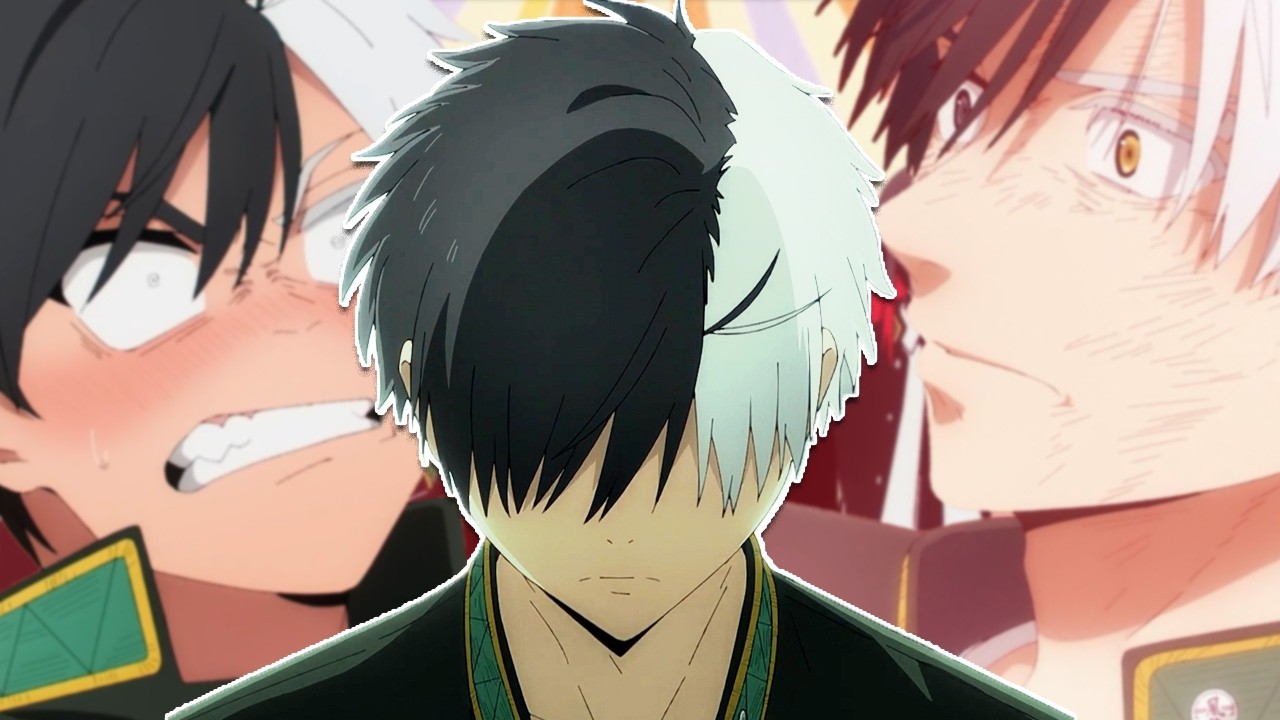
How Wind Breaker Revived Tsunderes
Sunderees are one of the more polarizing character archetypes found in anime, carving out a unique reputation in the community to the point where some people only watch or refuse to watch certain anime because a prominent character is a sundere. In case you don’t know what a sundere is, they are characters who aren’t initially honest with their affectionate feelings towards others. And due to this, they act standoffish, arrogant, and stuck up while vehemently denying said feelings. The term is a combination of tsun, which is anamaripia for sticking your nose up and turning away, hence the characteristic of being stuck up and d which basically means to be love struck and very affectionate. Put them together and you get sundere. Sunderees come in all shapes and sizes, and their levels of tun varies wildly from character to character. Some characters are pretty low-key sundes, only blushing and lightly denying when confronted with affection, while other sundere take the complete opposite route and beat the absolute out of you for telling them you appreciate them. A lot of the time, a tundra’s nature is used as a gag the author can rely on as an excuse to draw upon comedy whenever something intimate is happening. Most people don’t mind the first kind of sundere, but the overtun sundures are known for driving away potential viewers from certain anime because it kind of gets annoying watching a character with good intentions get punished repeatedly because a sundere can’t be honest with themselves. It can lead to clashing tone or ruin entire scenes because a sundere stole the moment with their gag. Personally, I’ve loved sunderees ever since I watched Todora as a middle schooler and my brain chemistry was altered forever. However, I can definitely understand why people wouldn’t be too keen on watching a show with a prominent sundere, especially if that sundere was the main character themselves. Which brings me to Windbreaker, a delinquent anime whose main character Sakura is very much a sundere, but in the best way possible. Unlike most anime where sunderees are mainly used for gags, Windbreaker leverages Sakura’s sun in order to double down on its themes. As a result, Windbreaker ends up hitting extremely hard in moments where Sakura is able to open up and be honest about himself. And in my opinion, a lot of windbreaker and its lessons wouldn’t hit nearly as hard if Sakura was just a regular fella instead of being a sundere. He’s the perfect example of how to write a sundere and utilize these iconic character traits to write an extremely heartfelt story where a young man learns what it means to be truly strong. The main reason why Sakura being a sundere is so quintessential to windbreaker is because the school Sakura is attending food isn’t a lawless place that needs someone to step in and whip a bunch of hooligans into shape like we’ve seen in many delinquent anime. It’s a warm welcoming environment cultivated by a man named Uma who treats his classmates like saplings whom he tries to nurture so that they can become the best version of themselves. Sagura isn’t striving to unite the school. He’s striving to be like the current leader of the school. A leader who personifies every theme in Windbreaker and teaches Sakura to face others. As the people around Umeia are the reason why he’s so strong in both fists and character. One of the core themes of Windbreaker is nature versus nurture. We’re constantly shown what happens to people who end up in the wrong crowd. Following those who engage in senseless violence with weaklings for the fun of it, while proclaiming to be the strongest ones around, they lose the light in their lives and make very poor decisions. And through these examples, we get to see what Sakura could have ended up like if he was in a more rough environment. At the beginning of Windbreaker, Sakura acts very much like an abandoned animal would, lashing out at everyone because of his own fear of being left alone again. Despite talking big and being quick to swing, Sakura’s view of himself is very unhealthy and negative, as he doesn’t believe he’s someone worth thanking or being at ease around, even if he’s actually helped people. Sakura also claims to have come to Fuian High School to ascend the trash heap, declaring that he wants to be the lowest of the low, the trashiest of the trash, because that’s the only way forward with his fists. He’s the first to spring into action when he sees someone being unfairly beaten up. Yet, he’s unable to properly accept thanks for it because his past experiences have proven to him that no matter what he does, if he isn’t the strongest, he’ll end up being abandoned. Anyways, he’s unknowingly giving people the boost they need by being his authentic self. Yet, he doesn’t believe he’s helping anyone at all. Despite somewhat falling in line with the Buduin MO, Sakura hadn’t fully grasped the full picture of Fuin and how different it was to the environment he came from. He’s ever suspicious of everyone around him because he assumes they have superficial intentions because that’s what he’s used to. The pain from abandonment troubles Sakura for much of Windbreaker early on and it leads to him being quite the sundere especially since everyone around him is constantly showing him affection. The first roadblock Sakura is told to overcome has nothing to do with his lack of strength physically more so his lack of strength socially when it comes to being unable to face the community he’s now a part of. If Sakura was just a normal student who didn’t go through these traumatic events and wasn’t a sundere it would be a lot easier for him to accept the nurturing environment of food and understand what it means to be strong. Initially Sakura believes that being strong is beating the hell out of the person in front of you to assert physical dominance. He doesn’t actively fight for anything apart from proving his own strength, which he directly attributes to his own self-worth. If he isn’t strong, he believes he’s going to be abandoned garbage. This is an extremely primitive way of thinking, but Sakura had been beaten off his path and tossed onto a tightroppe that can only be TKED with fists. When Sakuro first meets Umeyia, he was baffled at how Umeyia can act like such a clown all the time, yet everyone flocks to him. He’s always giving others tremendous responsibility while he chases his herbalist dreams. This will be such a different anime in Seattle. He doesn’t appear to exude strength. Yet, when Sakura meets him for the first time, he feels warm and safe. and his sundere instincts kick in to vehematly deny any positive emotions he feels towards someone he’s actively trying to overthrow. Sakura can’t immediately accept the positive qualities of Umeyia upon meeting him and slowly picking up those qualities with each new arc is why Sakura’s character development is so satisfying and well done. After meeting the leader of Fuin, Sakura ends up coming to the realization that the reason why Umeami and Boduin are so strong is because they fight to protect, not just to prove their physical strength. Their motto is anyone past this point who causes pain, who brings destruction, who holds evil in their heart, will be purged by Bufferin without exception. Bofurin fights to protect the people of its town. Whereas Sakura had only been fighting so far to prove his own worth. Even though Sakura is quick to help others, as he can’t stand people picking on weaklings to stroke their own ego, when it comes to accepting the thanks and the positive emotions directed at him after helping someone, Sakura is quick to go full sun mode. under his mask. You can tell that with each person Sakura helps, the looming wall he had built up for letting others in begins to slowly but surely crumble. Umeia’s always telling Sakura that these positive emotions welling up inside of him shouldn’t be pushed away and is instead evidence that he’s becoming a stronger, better person, even if Sakura repeatedly tells himself that he isn’t. It’s because of Sakura’s tundra nature that it takes a very long time for him to accept the feelings of love he has for his classmates and the fierce anger he feels when someone he cares about gets hurt. It’s not easy to properly accept thanks when all of your life you’ve been pushed away by others, even when you try to help them. This goes in both way as well. Sakura is innately willing to help others with his fists because that furthers his own goals of climbing to the top and proving his own medal through the trials of combat. So, fighting to protect others wasn’t a difficult concept for him to grasp. It was much more difficult for Sakura to accept the idea of leaning on others and allowing the people around you to cover up your weaknesses while you’re pursuing the group’s goals. You can never reach the top alone. Early on, Sakura finds himself constantly shouldering the burden for everything, especially after he’s elected to be his class’s leader. Since Sakura’s selfworth is linked directly to his combat ability, the mere idea of relying on others is terrifying, as Sakuro would be willing to make himself vulnerable, thus lowering his own worth, which heightens the chance of him being abandoned again. He sees Umeia delegate difficult tasks to his close comrades while he does menial chores around town and prods his pepper plants. Observing this kind of behavior from the strongest would put most people at ease and allow them to freely rely on others without fear. But Sakura’s guard is too high to accept something this easy. Due to this way of thinking, Sakura ends up making an error that puts the rest of his classmates in a disadvantageous situation. And once Sakura sees the results of his action, his fear of being discarded jumps up even more as he’s fully in his own head. This lesson was best shown during an event where Sakura wasn’t even fighting. Rather, he was sick. Although Sakura is used to toughing out sicknesses on his own, he was overwhelmed with the concern his classmates showed him. And like his sundere self, he lashed out. Sakura is at his most vulnerable at this time. He’s both mentally and physically fatigued, scared of being abandoned, and believed that his classmates think he’s holding them all back as a burden. Throughout Windbreaker, we’re constantly shown a metaphor of how Sakura navigates his life on a tightroppe in a pitch black room with no room for error or he’ll plunge into absolute despair. Sakura’s few nightmares depict him pondering if there’s solid ground below where people that genuinely accept him and his flaws are waiting. But because of his past experiences, he can’t get off his own mental tightroppe. This tight rope is the reason why Sakura is so sundere. Why he’s so hesitant to accept affection and show his own weaknesses to others. However, once he sees that everyone at Fuin wants Sakura to rely on them both for fighting and in general, Sakura is finally able to descend from the tightroppe in what I believe is one of the most hard-hitting moments in the show. For the first time in his life, Sakura is able to face the thing he’s most afraid of, his cold, honest feelings. With all of his might, he’s finally able to convey his troubled thoughts to his classmates who have slowly chipped away at his sundere shell in hopes of getting closer to him. Sakura apologizes to everyone for causing him trouble. And instead of being cast away like expected, Sakura’s feet touch solid ground where the light shines on and his friends are there waiting to bring him to a brighter day. The reason why this moment hits so hard is because we spent a lot of time seeing Sakura suppress these doubtful thoughts and act soon when people show him affection. Sakura being a sundere aids the message mangakani Storu is trying to relay. And it’s because of this character trait that windbreaker feels so uplifting, warm, and liberating. Sakura’s sundere tendencies aren’t just used for gags. They’re used to enhance his character in the themes of the story. If Sakura was just some regular schmuck that’s well adjusted to society, Windbreaker would have quickly found itself in that discount bin. It’s one of the few times where such a pivotal character being a big sundere didn’t drive people away, but instead brought people closer to watching Windbreaker. In my opinion, Sakura is the textbook definition of how to properly execute a sundere main character. And Windbreaker’s simple take on this trope is one of the best in the medium.
Tsunderes in anime. You either love them or hate them, but you can’t escape them. Usually, the tsundere trope is delegated to side characters since it’s so abrasive and divisive, but Wind Breaker forged a daring path of its own by electing to have its main character, Sakura, be a huge tsundere. If done poorly, making the main character a flaring tsundere would spell disaster for any story, but Wind Breaker executes this trope so well with Sakura that it ends up being a massive boost to Wind Breaker’s writing as opposed to driving potential viewers away. This is thanks to the themes established early on in the story, along with an incredible side cast that embodies these themes, which allows for Sakura to discover himself and face his tsundere nature in an honest, liberating way. Sakura being a tsundere makes Wind Breaker’s hardest hitting moments that much better, which is why I believe Wind Breaker has one of the best utilizations of this beloved trope in the medium.
Thanks so much for watching this video! If you enjoyed it, feel free to like & subscribe! Have a wonderful day 🙂
Timestamps:
00:00 What is a Tsundere?
01:17 Wind Breaker’s Central Tsundere
01:48 Wind Breaker NEEDS a Tsundere
02:37 Sakura’s Past Struggles
05:55 Relying on Others
07:46 The Ultimate Tsundere Payoff
#anime #windbreaker #manga
Been so long mate, your holding up quite well huh?
Been here as always, hiding behind the shadows, i finally commented lol.
Keep going 👅
The best thing about Sakura being a Tsundere is that whenever characters call him out for being a softie he never gets violent with them and instead just blushes
Peak video bro
Where did all your attack on titan videos go?