
ユーロスターのオリジナル水中高速列車 – ユーロスター プラスでブリュッセルからロンドンまで時速 300km で移動!
For over 30 years, the Eurostar high speed
train has been linking the UK with France, Belgium and in more recent years the Netherlands,
with plenty of change to come. This also includes its recent merger with Thalys, which has led
Eurostar to overhaul its service offering to make it… at least a bit less confusing!
Today we’ll be checking out the all new and end of another European rail odyssey and this
time is no exception. Having travelled all the way from Sweden by train, it’s time for the final
leg home as we pull in to Brussels South station… Despite its name, Bruxelles Midi (or Brussel
Zuid) acts as the main station for Brussels’ long distance and international traffic.
Opened in 1869 as a domestic terminus station, it’s gradually evolved into a major hub
for train travel not only across Belgium, but also internationally throughout
Europe. There’s also been a large addition of shops and eateries across the
station, which you may want to make use of before heading to the Eurostar check
in, but I’ll get back to this shortly… Midi station is the busiest station in Belgium
and one of the busiest in Europe with over 62,000 passengers daily from lots of different
countries. It’s also worth noting that Belgium has a total of three official languages
– French, Dutch and German and with Midi station hosting many connections across Europe
to places such as the Netherlands, Germany, France and even the Czech Republic, keeping up to
date with your languages is extremely beneficial. Amongst the International services here is
Eurostar, most being those which formerly ran under the Thalys brand which merged with Eurostar
in September 2023. These “Eurostar Red” services run from Paris to Belgium, the Netherlands and
Germany using TGV PBA and PBKA high speed trains, though the Blue Eurostar trains we all know
and love have recently been operating some of these services too which can be confusing!
What’s also confusing is the Eurostar stand here which, if you enter from the other side,
can be an easy mistake to make for the check-in spot! If you enter from the side I started
at however, the check-in’s pretty hard to miss and ours is open now for the 14:52, one of 9
trains per day to London St Pancras International… Eurostar recommends to arrive between 90 and
45 minutes before departure to check in – I usually aim for an hour as you have up to 30
minutes before departure before check-in closes, and queues can be VERY busy… fortunately
this wasn’t the case for me today! After scanning my e-ticket on the QR
reader to head through the barriers, it’s time to go through a quick and
brief security check – no need to take out any liquids or electronics,
just put the bags straight through… Finally there’s two passport checks by the
Belgian side and that of the British as the UK isn’t part of the European Schengen
Zone, and after this we’re home free! Past the duty-free section of the departure
lounge, don’t expect anything too fancy – I mean it’s hard enough as it is just to get
a seat! There are plenty of vending machines though and for those on Premium tickets or Carte
Blanche and Etoile Eurostar status, the Business Premier lounge… have you tried it before?
Boarding is called around 20 minutes before departure and up the travellators we finally get
a glimpse of our train – Eurostar use a mixture of their newer Siemens Velaro e320 units and older
Alstom TGV TMST trains, which were rebranded as “e300” following an extensive refurbishment in
the late 2010s, the name referring to their top speed of 300km/h. Having been in service since
Eurostar commenced operations in 1994, only a lucky 8 of the original 38 sets built remain in
active passenger service between London, Paris and Brussels, the remainder either stored, preserved
or scrapped. These 8 sets are formed of two power cars and 18 articulated passenger coaches.
I’m in coach 12 for today’s trip, which is one of the 6 possible coaches for both Eurostar Plus and
Eurostar Premium (formerly Standard or Business Premier) depending on the direction of travel,
the main difference between Plus and Premium being the increased flexibility, hot meal service
and lounge access in the latter. The changes were made to better align with the former Thalys
services, which also now use these designations. Both Plus and Premium accommodation use the
same seating, which is in a 2+1 configuration and features a very high quality interior, one
that in my opinion is far more premium than that of the e320s as we’ll see later in the trip.
There is a handy seat selector too, which for now is only available on London Eurostars, and it
looks like I’m the man in Seat 61 for this trip! There’s also plenty of luggage
storage too as to be expected, with plenty of overhead storage space as well as
larger racks in the vestibules for heavier items. Our journey to London goes via France with one
intermediate stop at Lille Europe, before heading under the sea via the Channel Tunnel to eventually
make the final stretch to the British capital, taking as little as 2 hours and 5 minutes
covering a distance of 373km. Lovely stuff! We leave Brussels on time at 14:52
as we sit back, relax and look forward to the journey ahead up to London…
We may not be at the far end of the train, but 12 carriages in still provides us with
the impressive view of our train snaking out of Brussels as we head towards the high
speed line – this is the HSL 1, which as the name suggests is the first high speed line to
have been brought into use in Belgium in 1997 and links the country with the French border
towards Lille and the Channel Tunnel in the North and Paris in the South. Despite the
poorer acceleration compared to the e320s, our e300 wastes no time in reaching our top
speed for today of 300km/h and with that, let’s not waste any more time ourselves
and take a look at the train’s interior… One of the more superior features over
the e320s is the seat, which especially in Plus or Premium is MUCH comfier on the
e300s with superb padding and ergonomics. Each side also has foldable armrests
as well as incredible legroom, which alone is worth the upgrade to Plus
for the right price and we’ll see why later… You can even adjust this if you wish
using the manual recline function, which is located on the window side.
Tray table wise, this is quite large as you would expect from a TGV – easy to work
from and enjoy some food! There’s also a smaller one for holding a mobile device and for a
mirror to see how good you look. The table seats feature rather smart retractable sections as
featured on the e320 trains which I rather like! Below this is a seatback pocket, located just
next the USB A and power socket which can either be a UK 3 pin or a 220v European
socket depending on where you’re sat, mine being an example of the latter. Above this
you’ll find a retractable cupholder as well. A reading light is located on the window
side too, which worked pretty well and was fairly simple to activate through the
switch next to the recline, with coathooks being located at the top of the seat.
Finally, there’s a drawdown blind which unlike the e320s, blocks the view
a lot better though there are still some see through portions as you can see!
Overall, a brilliant interior for the Eurostar Plus offer, possibly even a bit overkill for the
journey times these trains do, but for the price, definitely so… which I’ll get on to later!
Shortly before reaching the end of the HSL 1, the attendants came with the meal service offered in
Eurostar Plus – as with the old Standard Premier on the London routes, this is in the form
of a cold meal and if you have any dietary requirements, these can be informed up to 48 hours
before departure. I went for the Halal option, and the overall presentation is much better
than it was before Eurostar revamped its service offer… they’ve even managed to update
the logos on the cutlery and cups provided! The journey on the HSL 1 is a brief 30ish minutes
before we enter France and make a brief stop at Lille Europe. As at the time of editing, this is
one of two non-capital stations not to have been axed by Eurostar, the other being Rotterdam
Centraal in the Netherlands. Most people boarding here will be those connecting
from other major cities in France or, like me, those who constantly struggle to get
reservations for the direct service from Paris! We’re now back on the move and soon enter the LGV
Nord, the second and longest stretch of high speed line on our trip today. The line opened in 1993
initially serving communities in Northern France, but now provides a key role in serving
neighbouring Belgium as well as the Channel Tunnel rail link to the UK. Travelling
again at 300km/h, this is a good opportunity to show just how quiet and smooth the e300
is thanks to its brilliant ride quality… Soon enough, we pass Calais-Fréthun station,
a former Eurostar station which has closed indefinitely to international traffic as
the operator focuses on its core routes. Take note as well of the fencing to prevent
any illegal immigration, previously a common occurrence in early years of the Eurostar through
various means, and as the fencing increases and our speed reduces to 160km/h, this indicates
that we are about to enter the Channel Tunnel, the engineering marvel of this trip.
This is currently the 3rd longest railway tunnel in the world and has the longest
underwater segment. Opened in May 1994, it has recently celebrated its 30th anniversary,
much like Eurostar did a month before I did this recording, as highlighted by the commemorative
decals adorning the Northern portal entrance. Don’t expect any Finding Nemo scenes whilst
you’re down here – the journey through the tunnel lasts for around 20 minutes so you
can spend your time browsing the fast and free wifi (which works perfectly fine down here),
taking in the tunnel trivia which has thankfully returned since the rebrand, or, as I did, do
a walkthrough of the train to show you more… This is Eurostar Standard, which hasn’t
really changed since the new fare structure was introduced though the main difference is
added flexibility, as is the case for Plus and Premium. This makes up 10 carriages of the e300
sets and I know I’ve been bashing the e320s quite a bit compared to the e300s in this video so far,
but in all honesty the legroom in standard on the latter is cramped and very poor in comparison
and whilst the comfort is an improvement, I’d take the space provided on the e320
Standard offering any day if you ask me! In the vestibules you’ll also find magazines as
well as the usual safety cards, which have been updated to reflect the new Eurostar brand.
Coaches 6 and 13 are where you’ll find the dedicated café cars, though given the meal
service offers in Premium and Plus, this is more useful for those in Standard. You can also
buy Paris Metro tickets and London Underground Oyster cards here too if you don’t fancy wasting
time in the inevitably long queues upon arrival! The dedicated wheelchair spaces on the
train are found in carriages 9 and 10, alongside wheelchair accessible toilets which
are very spacious and clean inside… give or take the small amounts of tap water on the floor!
The standard toilets, which are found throughout the rest of the train, are much less spacious
but still better than most aircrafts flying between London and Continental Europe!
20 minutes later, we now exit the Channel Tunnel into Folkestone, Kent, following alongside
the conventional third rail electric lines the e300s previously used for the first 13 years of
operation. Nowadays, all Eurostar trains use the 300km/h HS1 line, the UK’s first and currently
only high speed line which opened in 2007. Below us is Ashford International which, alongside
Ebbsfleet and Calais which we passed earlier, is another victim of Eurostar’s “station-cull” with
again no plans set yet for reinstating services. The Medway Viaduct is soon crossed, which
is the site of one of Eurostar’s e300 trains setting the UK speed record of 334.7km/h
in July 2003, which still stands to this day and is recorded by a monument just next to
the viaduct, though it has seen better days! After passing the Queen Elizabeth II Bridge,
it’s now the home straight to St Pancras. I’m pleased to see Eurostar making changes to its
offerings to make it less confusing with those of the former Thalys routes and the service offering
seeing a much-needed presentation improvement too, though as is always my complaint with
Eurostar, they REALLY need to reduce their prices – Eurostar Plus fares start at £98 and
Standard at £51 with Premium a whopping £279, though prices are often A LOT higher than this
due to dynamic pricing. Ways around this are to use Eurostar Snap where possible or, as I did,
use an Interrail pass if you’re planning lots of train travel in Europe, with me paying €40 to
reserve my seat due to compulsory reservation. But there’s good news at least – Eurostar will
hopefully be facing competition in the next few years, with the main challengers expected to be
a Trenitalia/Evolyn joint venture and/or Virgin Trains, and with Eurostar’s expansion plans
into Germany and Switzerland on the table in the coming years, there’s certainly some hope
for travel from the UK into Continental Europe! After passing the white elephant of Stratford
International, we now reach the majestic London St Pancras International, arriving 2 minutes late and
bringing an end to another European rail odyssey… Now you’ve heard from me, I want to hear
from you – have you taken the Eurostar before? What route did you do and are
you excited for the future both for and against the operator? Let me know in the comments!
I hope you’ve enjoyed this video – please like and share it if you did to aid the channel’s
growth and don’t forget to subscribe to the channel and turn on notifications
for more content such as this weekly! Now I’m off home for some much needed rest and
relaxation before heading back to work. Thanks so much for coming with me on this trip and I look
forward to bringing you with me on my next one!
Get started with Rosetta Stone today using the following link for 60% off LIFETIME subscription which gives access to 25 languages! https://partners.rosettastone.com/omtherails-1
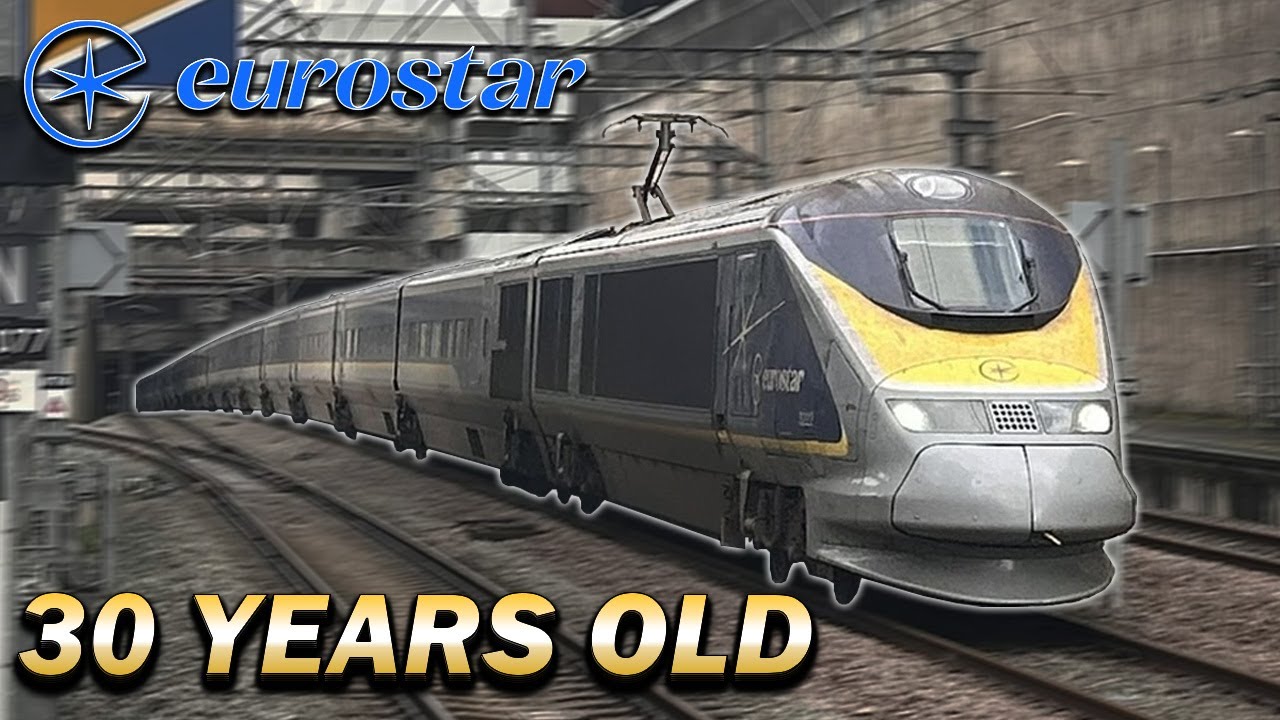
The Eurostar service has seen many changes over its 30 years of operation, however they fortunately still have a small number of their original e300 TMST trainsets in operation between London, Brussels and Paris. I took one of these trains as I wrapped up another European train trip to try the “new” Eurostar Plus, showing what you can expect from boarding to the onboard meal service on this 2 hour cross border journey. Enjoy the video!
Journey details:
Date of travel – December 2024
Operator – Eurostar
Train type – Class 373 TMST “e300”
Class of travel – Eurostar Plus
Origin – Bruxelles-Midi
Destination – London St Pancras International
Price – Eurostar Standard – £51/€59.52/$68.57
Eurostar Plus – £98/€114.37/$131.76
Eurostar Premium – £279/€325.61/$375.11
Distance – 373km/232 miles
Journey time – 2 hours, 7 minutes
Thanks for watching and I hope you enjoyed the video!
Music from EpidemicSound and is used under license.
Follow me on social media:
BlueSky – https://bsky.app/profile/omtherails.bsky.social
Instagram – https://instagram.com/omtherails
TikTok (posts coming soon!) – https://www.tiktok.com/@om.the.rails?lang=en
Support the channel here: https://ko-fi.com/omtherails
Link to the Eurostar Plus menu: https://www.eurostar.com/uk-en/eurostarplusmenu
Link to the Eurostar Café menu: https://www.eurostar.com/uk-en/travel-info/your-trip/food-on-board/our-menu
#class373 #eurostar #e300 #tmst #tgv #brussels #london #trains #tripreport #vlog #highspeedrail #highspeedtrain #channeltunnel
Timestamps:
00:00 Intro
00:37 Bruxelles-Midi/Brussel Zuid
01:49 Rosetta Stone – Learn a New Language Today!
03:07 Eurostar (inc Boarding Process)
06:03 Eurostar Plus, Boarding & Route Information
07:50 Eurostar Plus Interior Review
09:26 Meal Service & Travelling Through France
11:01 The Channel Tunnel
12:08 Walkthrough
13:37 Exiting the Channel Tunnel & Entering the UK
14:33 Journey Summary, Conclusions & Pricing
15:38 Arrival into London & Outro – Thanks for Watching!
Get started with Rosetta Stone today using the following link for 60% off LIFETIME subscription which gives access to 25 languages! https://partners.rosettastone.com/omtherails-1
Great video, sorry I probably missed it. Did the 40 euro or pound with the rail pass include a meal?
My first Eurostar trips were a few months ago on an Interrail pass, outbound to Rotterdam due to the works at Amsterdam in standard which was ok. Return from Brussels in Standard Plus which was much better.
Additional destinations and other operators can only be a good thing.
the Eurostar is great, much better than flying
did this in September 2016 to go visit my friends in Nottingham
Such a shame that the decent little café in the Brussels Midi Eurostar departure area had to make way for this "duty-free" monstrosity 😢
Flemish spoken in parts of Belgium not Dutch a slight difference between them, both spoken in the NL depending on the region. 2 minutes late would be recorded as on time as anything arriving within 3 minutes of schedule is recorded as on time for the official statistics by Network Rail, to keep them looking good, well not as bad.
Hi ! I'm wondering, what's the speedometer that you are using ? I'd love to have the same !
Please explain to me and other viewers why race to the Lounge to get a seat when you're going to sit for the next two hours, on the train?
While the seats are alright, the old seats on the 373s were far superior.
Honestly, competition for Eurostar can't come soon enough. They're charging more and more for less.
Last time I was on an E* it was to Waterloo! I'd love to use it, but it's cheaper to fly.
Fabulous trip report on the nostalgic TMST aka E300. My first ever trip on Eurostar was in March 1997, before the Belgian HS1 line opened. Journey time from London Waterloo Int'l was 3hrs 15mins calling at Ashford Int'l, Lille Europe and Brussels Midi. The only high speed portion back then was the TGV nord from Calais to Lille.
A feature of the E300 trains since service commenced in 1994 are the yellow fire doors between each carriage (12:17). These fire doors are closed only when the train is under the Channel but you are free to walk through the train. They are manually operated by a small lever.
In 1997 Eurostar operated 4 classes of service; Standard, Standard Plus (full fare ticket holders only), First Class and Premium First. There were no power sockets onboard, a payphone was available in the vestibule. Tickets were paper with magnetic stripe on the back which you had to feed into the automatic check in gates. There were no barcodes on the tickets to scan until the mid-2000s. First Class meal service included pre-departure champagne and hot towels, starter and main courses were served separately and included 2 hot main courses (Premium First was 4-course and included a choice of 2 starters and 3 hot mains). First Class passengers received mini Godiva chocolates whilst Premium received luxury boxes of chocolates before arrival. Premium 1st included complimentary taxi service on arrival, and were fully interchangeable with British Midland Diamond Euroclass (business class).
Travelling to the UK from Belgium there was no UK immigration check at Brussels (only Belgian Police checks), UK immigration officers carried out a full passport inspection onboard the train after departure from Lille. Back then you could buy a one way ticket from Brussels to Lille on Eurostar (no passport check required as it is a Schengen journey) and many an illegal immigrant would stay on to London and claim asylum. This loophole took years to close but was a well known tactic to enter the UK illegally.
Just rode this 2 weeks ago and it is definitely way better than flying in my opinion!
always thumbs up For you
Does anyone know the time of services the E300s operates, From Brussels to London or vice versa? Or does it just vary on your luck on the service whether you end up with an E300 or E320 ?
If you are travelling with Interrail you need to be very diligent about getting a seat reservation well in advance, especially in the summer they basically always sell out, even a week in advance.
Honestly though, flying is usually cheaper and more convenient, esepcially with LCY having a lot of cheap flights nowadays.
I have used Eurostar to Brussels, Paris and Lille 5 or 6 times … when I lived in London and now I live in Kent. Always from Ashford (where I currently work), never from St Pancras or Ebbsfleet. I hope to use the services again, but that is on hold until services start at Ashford. I refuse totravel 50 miles to London to make the journey back 40mph fast an hour later! (Jevelin trains on HS1 are limited to 140mph).
i frequently end up flying this route as it just frankly ends up cheaper
Nice one. I was booked on an e300 from London to Paris in May but Eurostar did an equipment change on the day, so we ended up on an e320. Oh well.
With the announcement from Eurostar of their plan to replace these and the former Thalys sets, get these units in while you can!